
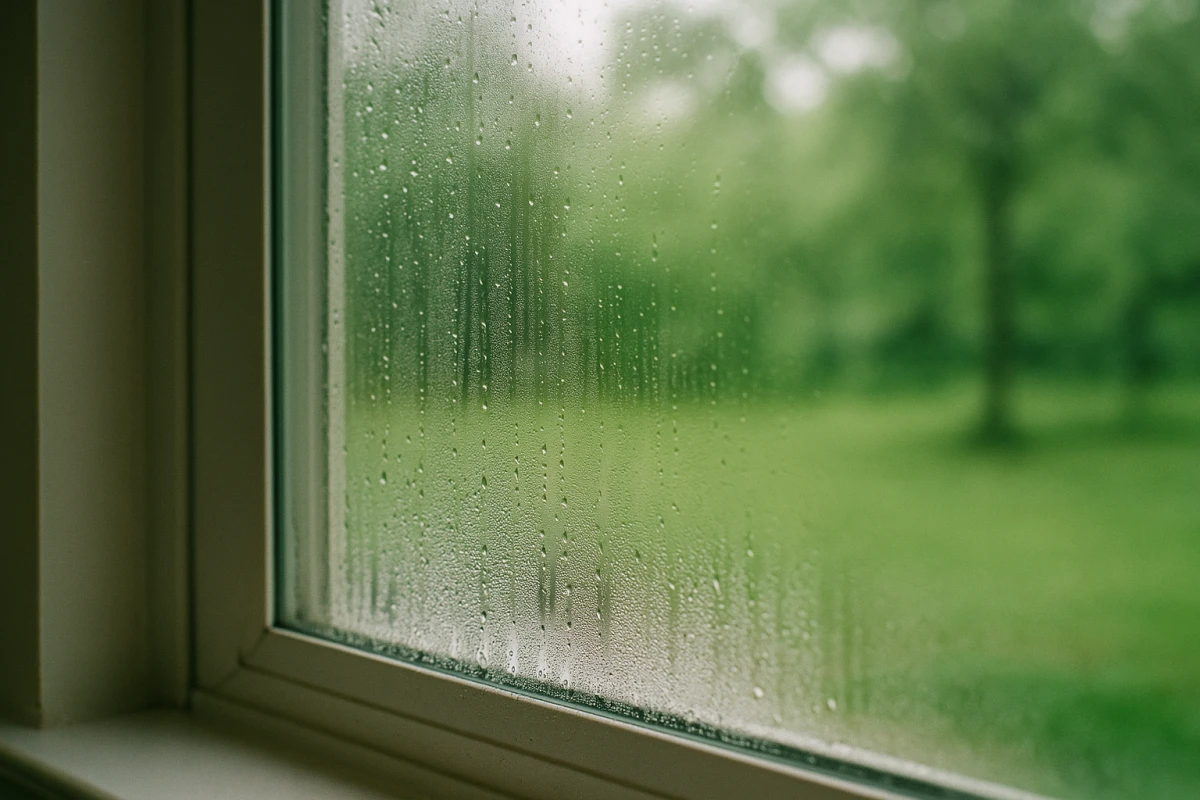
Mold needs three things: moisture, something organic to eat, and time. Katy generously provides all three almost year-round. Between Gulf humidity, a flood-prone landscape, slab-on-grade homes, and air conditioning that runs most of the calendar, our corner of west Houston is one of the more mold-friendly places to own a home in the country. Understanding why is the first step to staying ahead of it.
1. The humidity never really lets up
Katy sits in a humid subtropical climate just inland from the Gulf. Summer dew points routinely climb into the 70s, and relative humidity stays high for much of the year. Mold thrives whenever surfaces or air stay above about 60% relative humidity — a threshold many Katy homes cross indoors during humid stretches, especially if the AC isn't actively pulling moisture out. Damp air alone, with no leak at all, can grow mold on closet walls, around windows, and behind furniture on exterior walls.
2. The land holds water
Katy was built on flat coastal prairie — former rice fields — with heavy "gumbo" clay soil that drains slowly and a water table that sits high. Add the Barker and Addicks reservoirs to the east and a history of major flooding, and you have ground that stays wet long after the rain stops. That moisture works against foundations, into slabs, and up into the lowest courses of drywall.
3. Slab-on-grade construction
Almost all newer Katy homes are built on concrete slabs poured directly on that clay. Slabs are durable, but they put the living space right at ground level where moisture is highest, and they hide plumbing beneath the concrete. A slab leak or simple ground moisture can wick into bottom plates and drywall with no visible sign until mold or a musty smell appears. The expansive clay also flexes with our wet-dry cycles, stressing slabs and the pipes inside them over time.
4. Air conditioning that runs nine months a year
Our long cooling season is a double-edged sword. AC is what makes Katy summers livable and is the main thing keeping indoor humidity in check — but the system itself is a damp, dark machine. Coils sweat, drain pans hold water, and ducts carry cool air through hot attics where they condense. An oversized or aging system cools the air without removing enough moisture, leaving the house humid even as it feels cold. That musty smell when the AC kicks on is Katy's signature mold symptom.
5. Fast-paced new construction
Katy has been one of the fastest-growing areas in Texas, and homes built and closed up quickly can trap construction moisture in framing and concrete. Sealed into a tight, energy-efficient envelope in our humidity, that moisture sometimes seeds early mold in brand-new homes — which is why even a one-year-old Katy house can have a problem.
6. Storms and flooding
From Hurricane Harvey's reservoir releases to the heavy rain events that hit most years, flooding is part of life here. Floodwater soaks everything it touches, and in our heat that water becomes mold within a day or two if the structure isn't dried fast. Even homes that didn't flood can take water through a wind-driven roof leak in a Gulf storm. Read more in mold after flooding.
What this means for you
None of this means a Katy home is doomed to mold — it means moisture control is a year-round job here, not an afterthought. Keep humidity down, fix leaks fast, maintain your AC, vent your bathrooms outside, and act quickly after any water event. Catch problems early with an inspection and you'll spend far less than you would on a remediation. The climate is the challenge; awareness is the answer.
Frequently asked questions
Does every Katy home eventually get mold?
No — but the climate raises the odds, so prevention matters more here than in drier places. Homes that control humidity, maintain their AC, and fix leaks promptly can go indefinitely without a problem. The risk is manageable; it just can't be ignored.
Can I have mold without any leak?
Yes. In Katy, ambient humidity alone can grow mold on cool exterior walls, in closets, around windows, and behind furniture if indoor humidity stays high. That's why a hygrometer and good dehumidification matter even in a leak-free home.
Is new construction safer from mold?
Not necessarily. New Katy homes can trap construction moisture and, with tight modern envelopes, hold humidity inside if the AC doesn't dehumidify well. Brand-new houses get mold here more often than people expect.
What's the most important thing I can do?
Keep indoor relative humidity below 60%, and act fast on any water. Those two habits prevent the large majority of Katy mold problems. A hygrometer, a well-maintained AC, vented bath fans, and quick leak repairs go a long way.