
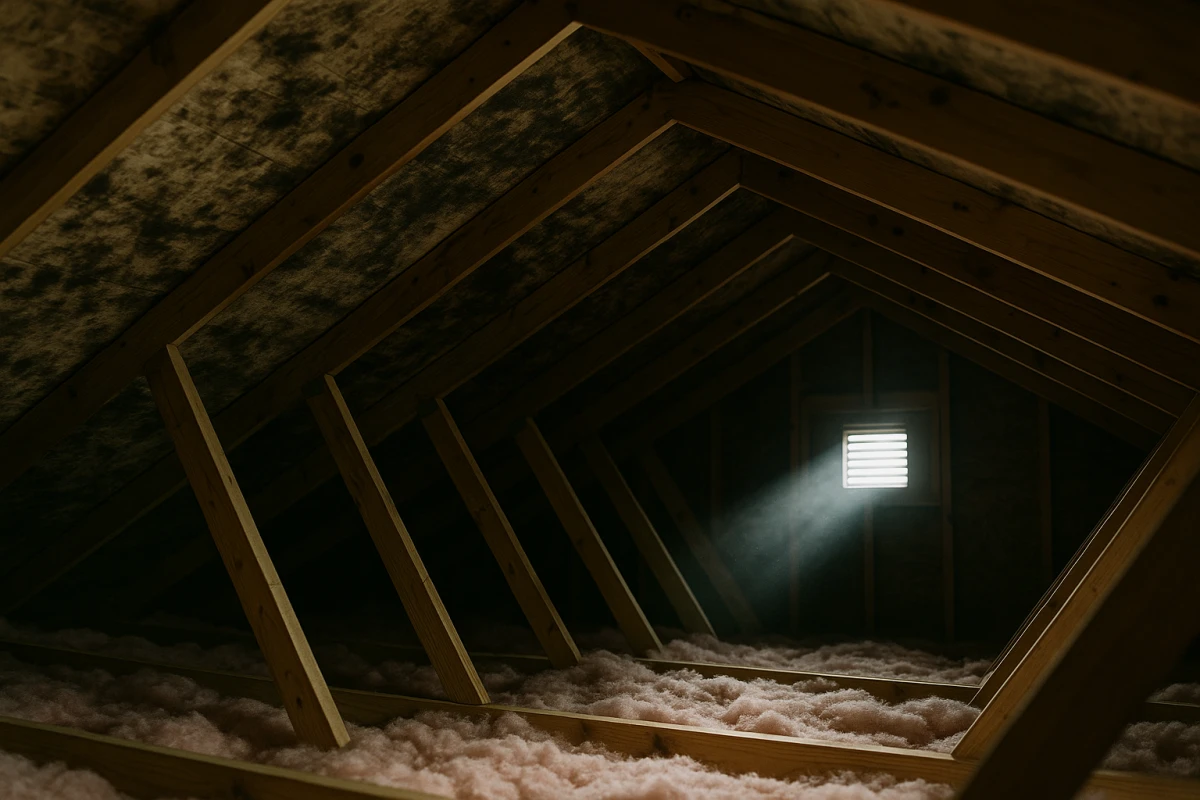
Katy attics are brutal on a house. Summer attic temperatures can top 130°F while the air outside hangs heavy with humidity, and when that moist air meets a cool surface — the underside of the roof deck, a duct, an AC plenum — it condenses. Add a bathroom fan that dumps into the attic instead of outside, or a roof leak from a wind-driven storm, and you have the recipe for the dark staining we see on so many local roof decks. Attic mold rarely makes you sick directly, but it signals a moisture and ventilation problem that's quietly aging your roof and raising your energy bills.
What causes attic mold in Katy
- Poor ventilation: too few soffit and ridge vents to flush hot, humid air, so moisture lingers against the deck.
- Bath and dryer fans venting into the attic: a surprisingly common builder shortcut that pumps warm, wet air straight onto cold sheathing.
- Roof and flashing leaks: after hail or high winds, water tracks down the decking and feeds mold along the path.
- AC sweat: uninsulated ducts and air handlers in the attic drip condensation onto wood and insulation.
- Blocked soffits: insulation stuffed over the eaves cuts off the intake airflow the attic needs.
How attic mold is removed
Because attics are framing and sheathing rather than finished drywall, remediation looks a little different. You usually can't — and don't need to — tear out the roof deck. Instead, pros clean and treat the wood, then fix the ventilation so it can't return:
- Containment at the access. The attic hatch is sealed and a negative-air machine keeps spores from drifting down into the house.
- Removal of ruined insulation. Mold-laden or wet batts and blown-in insulation are bagged and removed.
- Surface remediation. The decking and trusses are HEPA-vacuumed and treated — often with an abrasive media blast or an antimicrobial coating that leaves the wood clean.
- Ventilation fix. This is the real cure: adding soffit and ridge vents, re-routing bath fans outdoors, sealing duct sweat, and re-insulating.
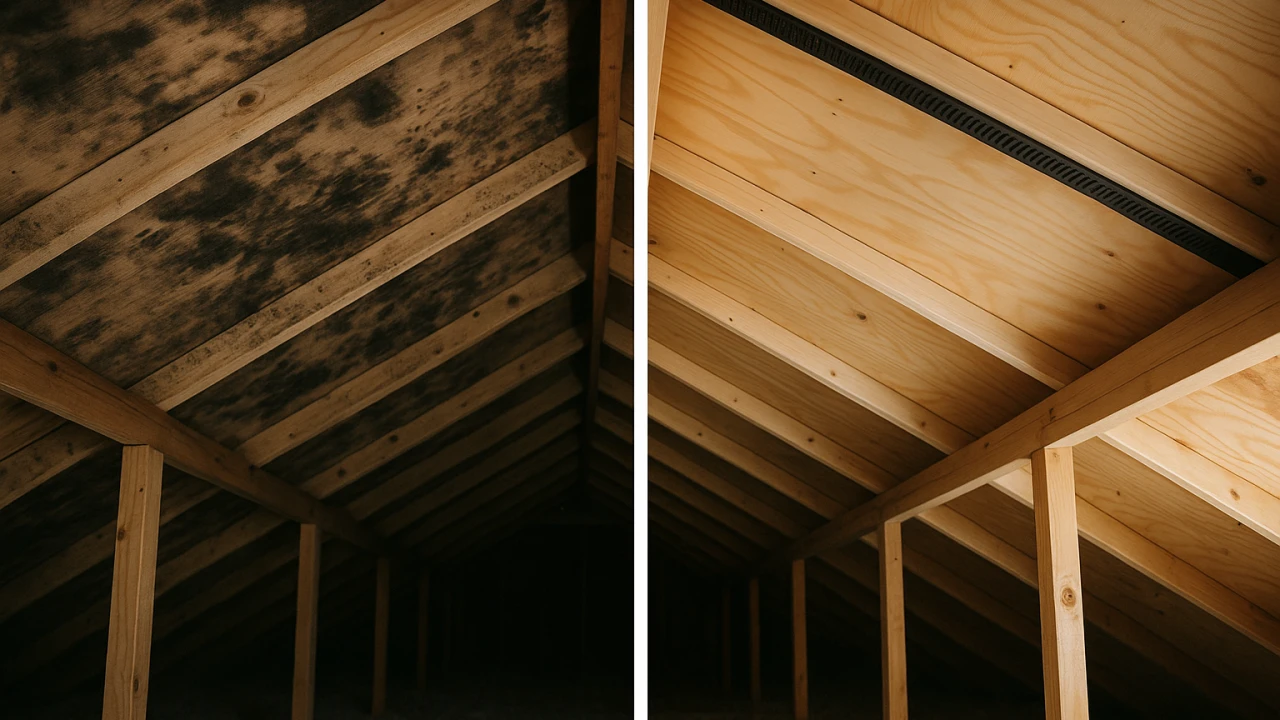
Why the ventilation fix matters more than the cleaning
Plenty of Katy homeowners pay to have an attic cleaned, skip the airflow repair, and watch the staining creep back within a year. Cleaning treats the symptom; ventilation treats the cause. A balanced attic — intake at the soffits, exhaust at the ridge — keeps the deck close to outdoor temperature so humid air doesn't condense on it. That same fix also lowers the heat load on your AC and extends shingle life, which is why it pays for itself over time in a climate like ours.
Signs you have attic mold
- Dark gray, black, or white staining on the underside of the roof deck
- A musty smell when you open the attic hatch
- Frost-like crystals on nail tips in cooler weather (condensation freezing)
- Rusty nail points or damp-looking insulation
- Higher-than-expected cooling bills from a moisture-laden attic
What attic mold remediation costs
Attic jobs vary widely with size, pitch, access, and how much insulation has to be replaced. A straightforward clean-and-treat with minor venting is on the lower end; a full insulation removal, deck treatment, and ventilation overhaul costs more. Get a free attic assessment and see our cost guide.
Frequently asked questions
Is attic mold dangerous to my family?
Attic mold is usually separated from your living space, so direct exposure is lower than wall or HVAC mold. But spores and moist air can migrate down through the attic hatch, recessed lights, and duct chases, and the underlying moisture problem can damage your roof structure. It's worth addressing.
Do I have to replace my roof decking?
Almost never. Unless the wood is structurally rotted from a long-term leak, the decking is cleaned and treated in place. Full sheathing replacement is rare and reserved for genuinely deteriorated wood.
Will fixing my attic lower my energy bills?
Often, yes. A properly vented, dry attic stays closer to outdoor temperature and puts less heat and humidity load on your AC — a real benefit in Katy, where cooling runs most of the year.
My bath fan vents into the attic — is that the cause?
It's one of the most common causes we see. A fan dumping warm, moist shower air onto cool decking creates exactly the condensation mold needs. Re-routing it to vent outside is a key part of a lasting fix.