
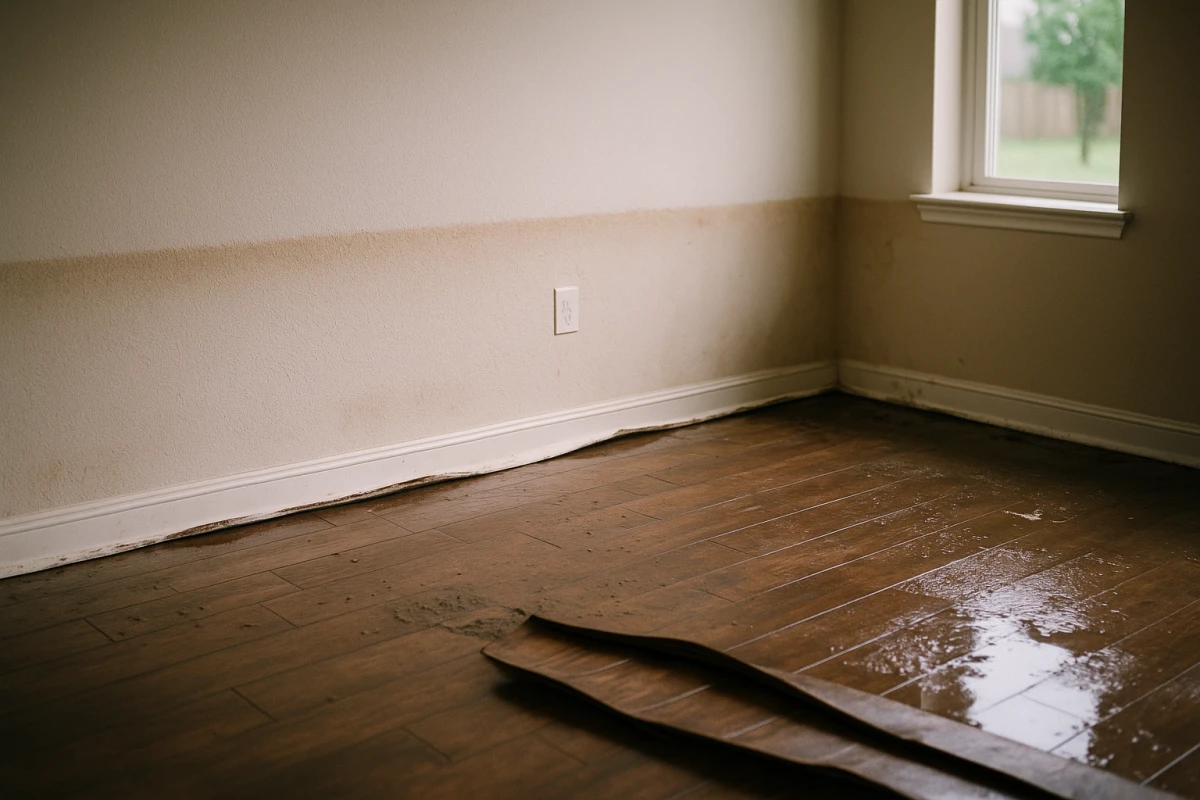
If you own a home in Katy, flooding isn't an abstract risk — it's local history. The 2017 Addicks and Barker reservoir releases put water into thousands of homes, and heavy-rain events test the area's drainage most years. The cruel part is that the flood is just the beginning: in our heat and humidity, the mold that follows can do as much damage as the water itself if the home isn't dried fast and correctly. This guide covers what to do, what to watch for, and how to make sure flood mold doesn't come back.
Why flooding leads to mold so reliably here
Mold needs material that stays wet, and a flooded Katy home stays wet in places you can't see — inside walls, under flooring, in the bottom plates, in insulation. With warm temperatures and high humidity, mold can begin within 24 to 48 hours. Simply removing standing water and running household fans almost never dries the structure fast enough to prevent it. That's the core reason professional extraction and commercial drying matter after a real flood.
The first 48 hours: what to do
- Stay safe. Don't enter standing water near electricity; watch for structural and contamination hazards, especially with floodwater.
- Document everything. Photograph and video all damage before removing anything — essential for flood-insurance claims.
- Get water out and air moving. Extract standing water and run the AC if it's safe; lower humidity immediately.
- Remove soaked porous items. Wet rugs, soaked furniture, and waterlogged belongings should come out to slow mold and reduce odor.
- Call for professional drying. Speed is everything — the faster the structure dries, the less you lose and the lower the mold risk.
Why "cut and dry" beats "patch and paint"
After a flood, contaminated drywall is typically cut out above the water line, wet insulation removed, and the cavity dried and verified before anything is rebuilt. The shortcut — letting it "dry out" and painting over it — is exactly how flood mold becomes a hidden problem. We regularly hear from Katy owners who bought homes where flood drywall was patched rather than properly remediated, only to find mold behind the new paint months later.
Category 3 water: treat it as contaminated
Most Katy flood water — reservoir releases, storm-drain and bayou backup, anything that traveled across the ground — is "Category 3" or black water, meaning it carries contaminants. Porous materials it touched (drywall, carpet, pad, insulation, upholstered furniture) generally can't be safely saved and should be removed. This isn't over-caution; it's the standard restoration approach for contaminated water, and it matters for your family's health.
Verifying the home is actually dry and clean
Drywall and framing can feel dry on the surface while still holding enough moisture inside to grow mold. Professionals dry to a measured target with moisture meters, not by feel, and many homeowners get a post-remediation clearance test — air samples compared against an outdoor baseline — before rebuilding. That verification is your proof the job worked, and it's worth insisting on after a major flood.
Insurance: flood vs. homeowners
This trips up a lot of Katy homeowners. Standard homeowners policies generally exclude rising-water flood damage — that's covered by separate flood insurance (NFIP or private), which much of Katy needs given the flood zones. Mold that follows a covered sudden event (a burst pipe) may fall under homeowners up to a sublimit. Mold after a true flood typically falls under flood coverage, if you carry it. Document everything and read our insurance guide.
Frequently asked questions
My house flooded but seems dry now — am I safe?
Not necessarily. Surfaces dry long before the framing and wall cavities do, and that hidden moisture is what grows mold. A moisture inspection can confirm whether the structure is truly dry or still at risk. It's worth checking before you assume you're clear.
How soon after a flood does mold start?
In Katy's warm, humid conditions, mold can begin within 24 to 48 hours on wet materials. That's why fast professional extraction and drying make such a difference — the goal is to dry the structure before mold ever gets established.
Do I have to throw out everything that got wet?
Porous items soaked by contaminated floodwater — carpet, pad, upholstered furniture, mattresses, drywall, insulation — generally can't be safely saved. Hard, non-porous items can often be cleaned and disinfected. A restoration pro can help you sort what stays from what goes.
I think my home's old flood repair was done wrong — what now?
Get a moisture inspection. A pro can check the old repair lines, wall cavities, and hidden areas for lingering moisture and mold. If a past flood was patched rather than properly dried and remediated, it's better to find out now than after it spreads.