
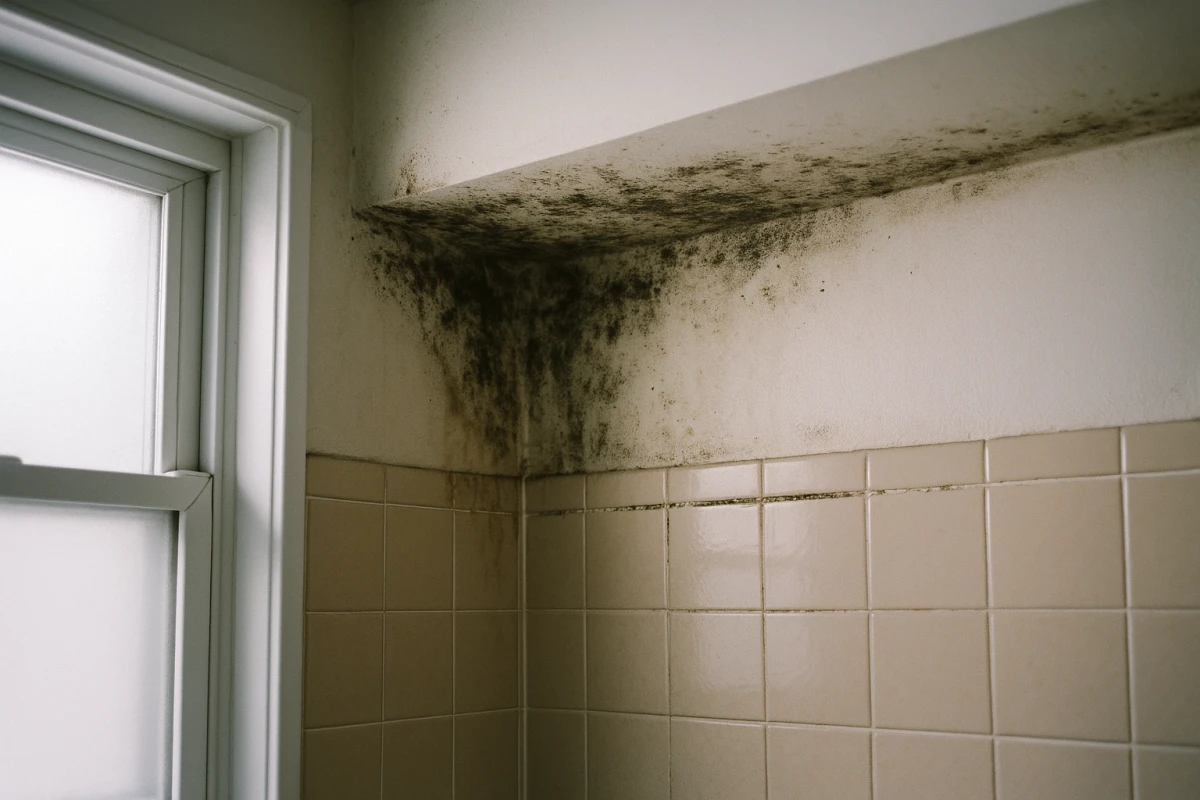
Bathrooms and kitchens are where most Katy homeowners first meet mold — and where surface mildew gets confused with a real problem. A little dark speckling on shower grout or window caulk is ordinary in our humidity and wipes away. The trouble starts when mold spreads onto painted drywall, blooms on the ceiling, or hides in the cabinet base under a sink. That's the difference between a cleaning job and a moisture problem that needs to be opened up and dried.
Where mold hides in Katy bathrooms
- Shower and tub surrounds: failed grout and caulk let water behind the tile, where it feeds mold on the backer and framing.
- Ceilings: a weak or missing exhaust fan lets steam condense overhead, the classic cause of bathroom-ceiling mold.
- Around toilets and supply lines: slow leaks wick into the subfloor and bottom of the wall.
- Window sills: condensation on single-pane or aging windows pools and rots the sill.
Where mold hides in Katy kitchens
- Under the sink: a dripping P-trap or supply valve quietly soaks the cabinet base — the single most common kitchen find.
- Behind the dishwasher and fridge: ice-maker and drain lines fail slowly, out of sight.
- Backsplash and countertop seams: water seeps where caulk has failed.
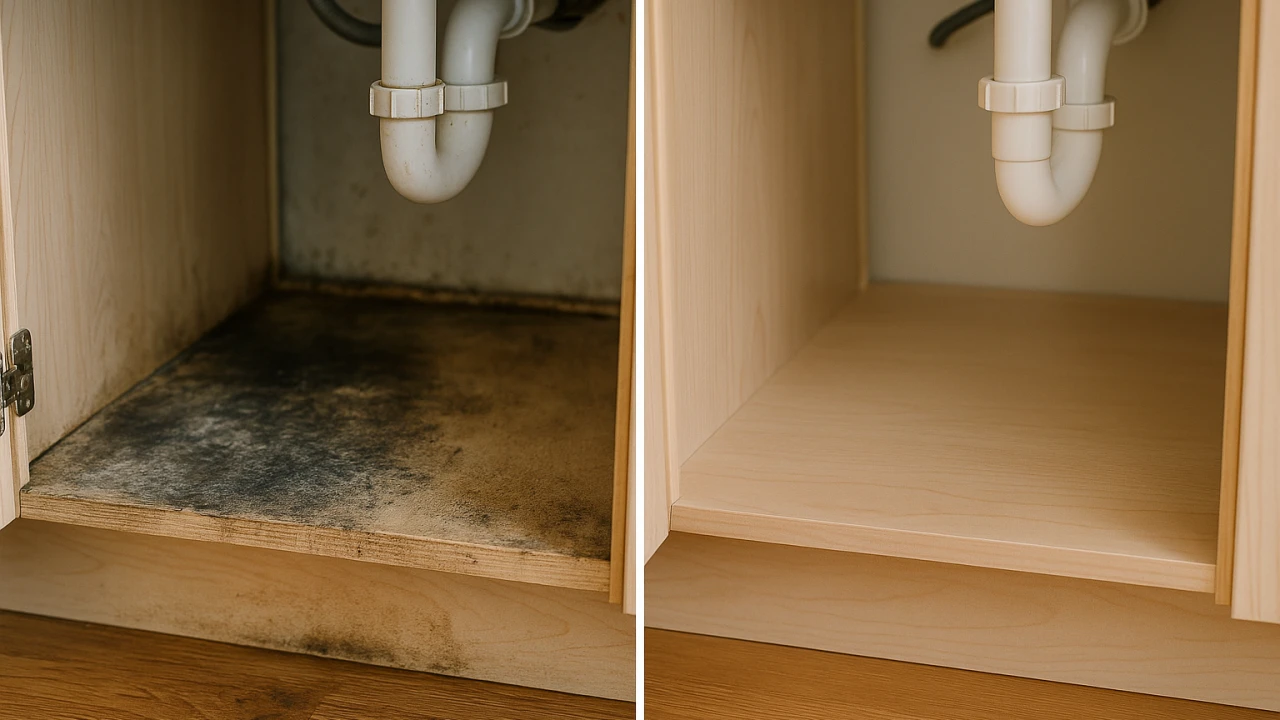
Mildew vs. mold — do you need a pro?
Here's a practical Katy rule of thumb. If it's a thin film on a hard, non-porous surface — tile, glass, sealed grout — under about 10 square feet, and it wipes off and stays gone, you can usually handle it yourself with proper ventilation and cleaning. Call a pro when mold returns within days, spreads onto drywall or wood, comes with a musty smell, or shows up after a leak. Those are signs water is getting into porous material behind the surface, and surface cleaning won't fix it.
How the pros handle it
- Find the water. A moisture meter traces how far a leak has spread behind tile or under a cabinet.
- Contain and remove. Affected drywall, backer board, or cabinet material is removed under containment.
- Dry and treat. The cavity is dried and framing is cleaned and treated.
- Fix the source and rebuild. The leak is repaired, ventilation improved, and the surface restored with mold-resistant materials.
Preventing it from coming back
- Run bath fans during and after showers; confirm they vent outside, not into the attic.
- Re-caulk showers, tubs, and sinks at the first sign of cracked or peeling seals.
- Wipe down shower walls and fix dripping fixtures promptly.
- Keep cabinet doors under sinks open occasionally to let damp air escape.
- Use the range hood when cooking and boiling adds moisture to the kitchen.
What it costs
Surface cleanups are inexpensive; jobs that require opening a wall, replacing a cabinet base, or repairing subfloor cost more depending on the spread. Our estimator gives a quick ballpark and a free quote confirms it.
Frequently asked questions
The mold keeps coming back on my shower ceiling — why?
Almost always ventilation. If steam can't escape, it condenses overhead and mold returns no matter how often you clean. A properly sized exhaust fan vented to the outdoors, run long enough after each shower, usually solves it. If it persists, there may be a roof or flashing leak above.
Is the black stuff in my grout dangerous?
Usually it's surface mildew, which is more of a cosmetic and air-quality nuisance than a hazard for most people. It's worth removing and keeping at bay, but it's not the same as mold growing inside the wall. If it spreads to painted drywall or smells musty, have it looked at.
Do I need to replace my whole bathroom?
Rarely. Remediation is targeted to the affected materials — a section of wall, a cabinet base, some backer board — not the entire room. A good pro removes only what's contaminated and rebuilds that area.
Can a slow sink leak really cause mold?
Yes, and it's one of the most common causes we see in Katy kitchens. A drip you barely notice keeps the cabinet base and wall behind it damp around the clock, which is exactly what mold needs. Fixing the leak is the first step.