
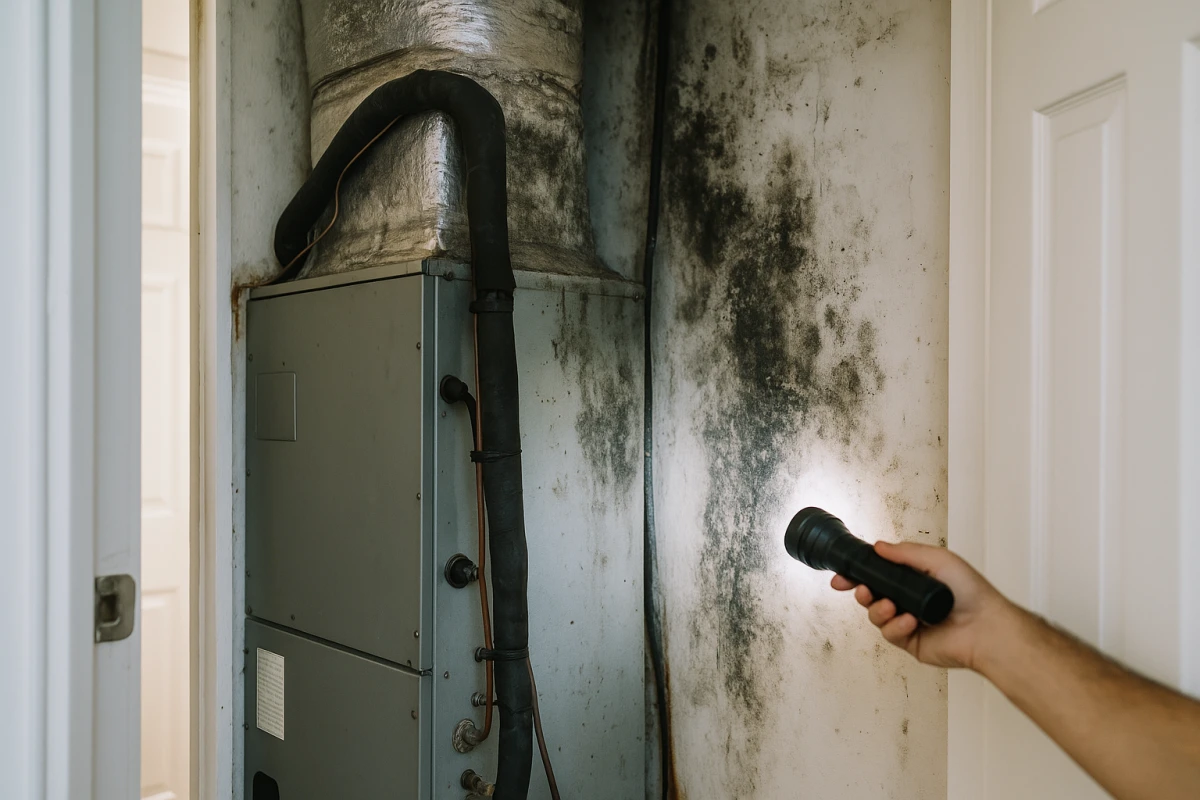
If there's one mold source unique to how Katy lives, it's the air conditioner. Our AC systems run from early spring deep into fall, and every one of them is a dehumidifier with a dark, damp interior — coils that sweat, a drain pan that holds water, and ductwork that carries cool air through hot, humid spaces. When any of that gets out of balance, mold grows right in the path of the air you breathe, then distributes spores to every room. A musty smell that hits you when the AC kicks on is the classic Katy symptom.
Why AC systems grow mold here
- Constant condensation: warm, humid air across a cold coil produces water all day; if the drain pan or line clogs, it sits and breeds mold.
- Oversized units: an AC that's too big cools fast but doesn't run long enough to pull humidity down, leaving the house damp.
- Sweating ducts: uninsulated or poorly sealed ducts in a hot attic drip condensation and grow mold on the exterior and at registers.
- Dirty coils and filters: dust on a wet coil is food for mold; a neglected filter accelerates it.
- High indoor humidity: if your home sits above 60% RH, the whole system and the rooms it serves stay mold-friendly.
Signs of mold in your HVAC system
- A musty or earthy smell that's strongest when the system first turns on
- Visible mold around vents, registers, or the air-handler closet
- Allergy or respiratory symptoms that worsen indoors with the AC running
- Water stains or standing water around the indoor unit or in the pan
- Black specks blowing out of supply vents
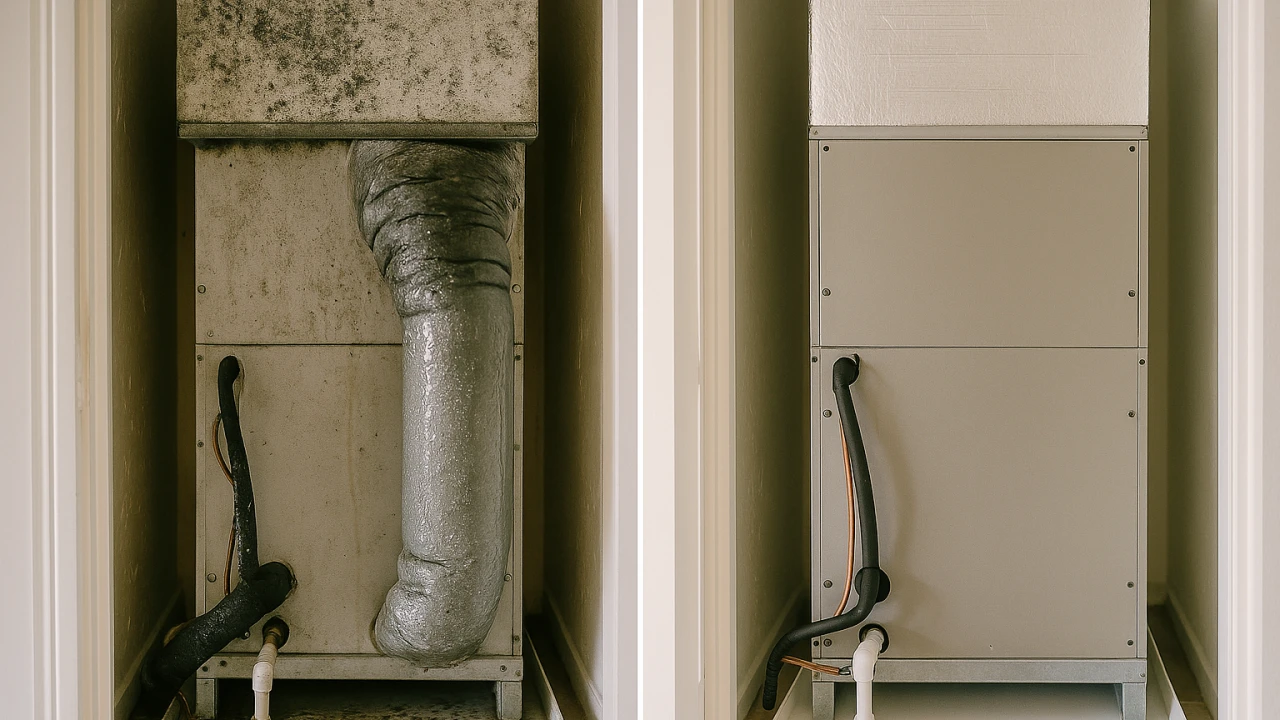
How HVAC mold remediation works
- Inspection. A pro checks the coil, blower, drain pan and line, plenum, and a sampling of duct runs, and measures indoor humidity.
- Component cleaning. Coils, blower, and the pan are cleaned and treated; a clogged condensate line is cleared.
- Duct remediation. Affected flexible ducts are often replaced rather than cleaned; hard ducts and boots are HEPA-cleaned and treated.
- Insulation & sealing. Sweating ducts are re-insulated and sealed so they stop producing condensation.
- Humidity control. The real fix — right-sizing, a fresh-air or dehumidification strategy, and habits that keep the home below 60% RH.
Should you replace ducts or clean them?
It depends on the duct type and how contaminated they are. Flexible insulated ducts with interior mold growth are usually replaced, because their inner liner can't be reliably cleaned. Sheet-metal trunks and boots can typically be cleaned and treated. A good HVAC remediation pro will recommend the least-invasive option that actually solves the problem, not a blanket "replace everything."
Cost and the humidity payoff
HVAC mold work ranges from a focused coil-and-pan cleaning to full duct replacement and dehumidification. Because the system touches every room, fixing it often resolves whole-house musty smells and comfort problems at once. See our guide on AC, humidity, and mold and our cost guide.
Frequently asked questions
Why does my house smell musty only when the AC runs?
That's a textbook sign of mold somewhere in the system — on the coil, in the drain pan, in the plenum, or in the ducts. When the blower turns on, it pushes air across that growth and carries the odor (and spores) into your rooms. It's worth having the system inspected.
Is duct cleaning enough to fix HVAC mold?
Often not by itself. If the underlying humidity and condensation aren't addressed, mold regrows. Effective remediation cleans or replaces affected components and then controls the moisture — right-sizing, sealing ducts, and frequently adding dehumidification.
Will a whole-home dehumidifier help?
In Katy, frequently yes. Many homes can't get below 60% relative humidity on AC alone, especially in shoulder seasons when the system runs less. A dedicated dehumidifier keeps the whole house in the safe range and takes load off the AC.
How often should I service my system to prevent mold?
At least annually, ideally before cooling season. Keep filters fresh, the coil clean, and the condensate line clear. In our climate, a clogged drain line is one of the most common triggers for AC mold.