
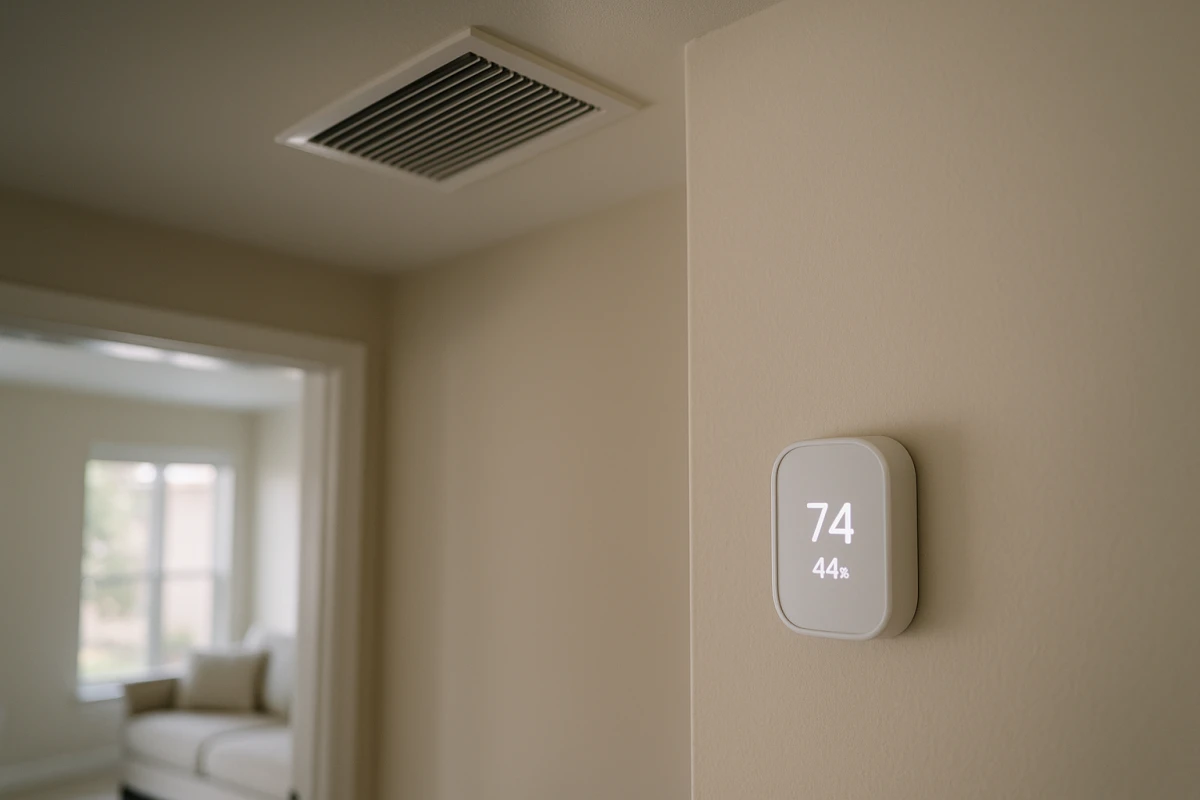
In Katy, your air conditioner is both your best defense against mold and, when something goes wrong, one of its most common causes. The same system that pulls humidity out of your air runs through damp coils, holds water in a pan, and pushes air through ducts in a hot attic — and any of those can turn into a mold source that spreads spores to every room. Understanding the AC-humidity-mold connection is key to a healthy home in our climate.
How your AC controls humidity
Air conditioning doesn't just cool — it dehumidifies. As warm, humid indoor air passes over the cold evaporator coil, moisture condenses out, drips into the drain pan, and exits through the condensate line. That's why a well-running AC keeps a Katy home comfortable: it's constantly wringing water out of the air. The trouble starts when the system is sized or maintained in a way that breaks that balance.
When the AC becomes the problem
Oversized systems
Bigger isn't better for humidity. An oversized AC cools the air quickly and shuts off before it has run long enough to remove much moisture. The house feels cold but clammy, humidity stays high, and mold-friendly conditions persist. This is one of the most common and most overlooked causes of a humid, musty Katy home.
Clogged condensate drains
All that condensed water has to go somewhere. If the drain line clogs — common with algae and dust — water backs up into the pan and overflows into the air-handler closet, soaking drywall and growing mold. A clogged condensate line is one of the most frequent triggers for AC-related mold we see in Katy.
Sweating, leaky ducts
Ducts running through a 130°F attic carry air near 55°F. Where insulation is thin, missing, or poorly sealed, those ducts sweat — condensation forms on and around them, feeding mold on duct exteriors, at register boots, and on nearby framing and insulation. Leaky ducts also pull humid attic air into the system.
Dirty coils and neglected filters
Dust on a wet coil is mold food. A clogged filter restricts airflow and lets the coil stay damp, and a neglected system accumulates the organic debris mold needs. Routine maintenance keeps the wet parts clean.
Getting humidity under control
Because AC alone can't always keep a Katy home dry — especially in mild weather when it runs less — controlling humidity often takes a layered approach:
- Right-size the system. If your AC short-cycles and the house feels clammy, have the sizing evaluated.
- Add a dehumidifier. A whole-home dehumidifier keeps the entire house in the 45–55% range regardless of how much the AC runs.
- Seal and insulate ducts. Stop the sweating and the humid-air infiltration at the source.
- Maintain the system. Annual service, clean coils, fresh filters, and a clear condensate line.
- Monitor with a hygrometer. Keep an eye on indoor humidity so you catch a drift above 60% early.
When mold is already in the system
If the AC has already grown mold, cleaning the affected components and ducts is step one — but it won't last if the underlying humidity and condensation aren't fixed. Lasting results pair remediation with humidity control: clean or replace what's contaminated, then change the conditions so it can't regrow. See our HVAC mold removal service for how the work is done.
Frequently asked questions
Why is my house cold but still humid?
Usually an oversized AC. It cools the air fast and shuts off before running long enough to remove moisture, so you get a cold, clammy house with high humidity — ideal conditions for mold. Having the system sizing evaluated, and often adding dehumidification, solves it.
Can my AC really spread mold through the whole house?
Yes. If mold grows on the coil, in the drain pan, in the plenum, or in the ducts, the blower pushes spores into every room each time it runs — which in Katy is most of the year. That's how a hidden AC mold problem becomes whole-house symptoms.
How often should I service my AC to prevent mold?
At least once a year, ideally before cooling season, plus regular filter changes. Keep the coil clean and the condensate drain line clear — a clogged line is one of the most common causes of AC mold in our area. Routine maintenance is cheap compared with remediation.
Will a dehumidifier really help in Katy?
Often significantly. Many Katy homes can't stay below 60% humidity on AC alone, especially in spring and fall when it cycles less. A whole-home dehumidifier holds the entire house in the safe 45–55% range and reduces the mold risk throughout.