
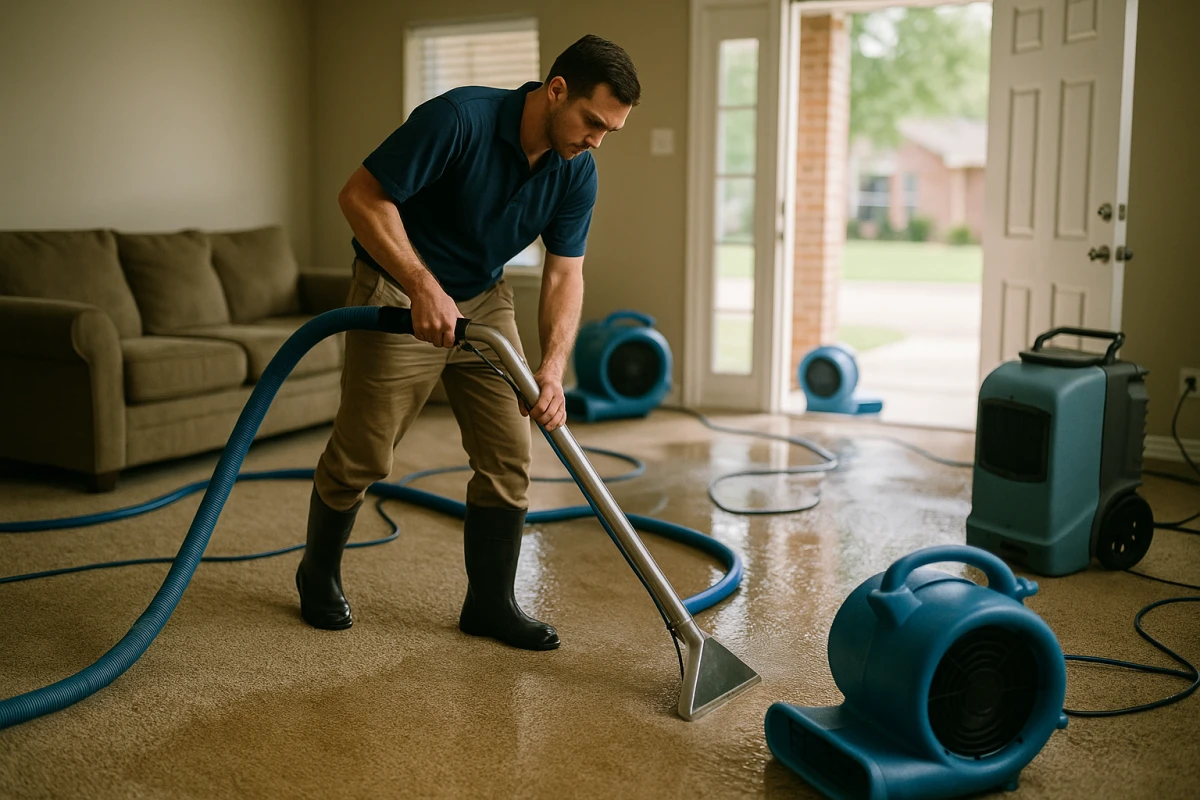
Few places in America know flooding like Katy. Between the Barker and Addicks reservoirs, the flat prairie that drains slowly, and the tropical systems that park over the Gulf Coast, thousands of local homes have taken water — some more than once. And in our climate, standing water plus heat is a mold factory. The clock starts the moment the water stops moving: drywall begins wicking immediately, and mold can establish in 24 to 48 hours. Fast, professional water extraction and structural drying is what keeps a flood from becoming a mold remediation.
Why flood water and mold go together in Katy
It's not just the volume of water — it's how long materials stay damp afterward. A Katy slab home holds moisture in the bottom plates, the drywall paper, the insulation, and the subfloor long after the visible water is gone. With indoor temperatures warm and humidity high, those wet materials are exactly what mold colonizes. That's why simply pumping out the water and running a box fan almost never prevents mold after a real flood.
The three categories of water — and why it matters
Restoration pros classify water by how contaminated it is, and it changes everything about what can be saved:
- Category 1 (clean): a supply line or water heater break. Caught fast, much can be dried in place.
- Category 2 (gray): dishwasher or washing-machine overflow, some condensate. Requires more removal.
- Category 3 (black): reservoir releases, bayou and storm-drain backup, sewage. This is most Katy flood water — porous materials it touched must come out.
A pro can map moisture and check those old repair lines before you ever see a stain.
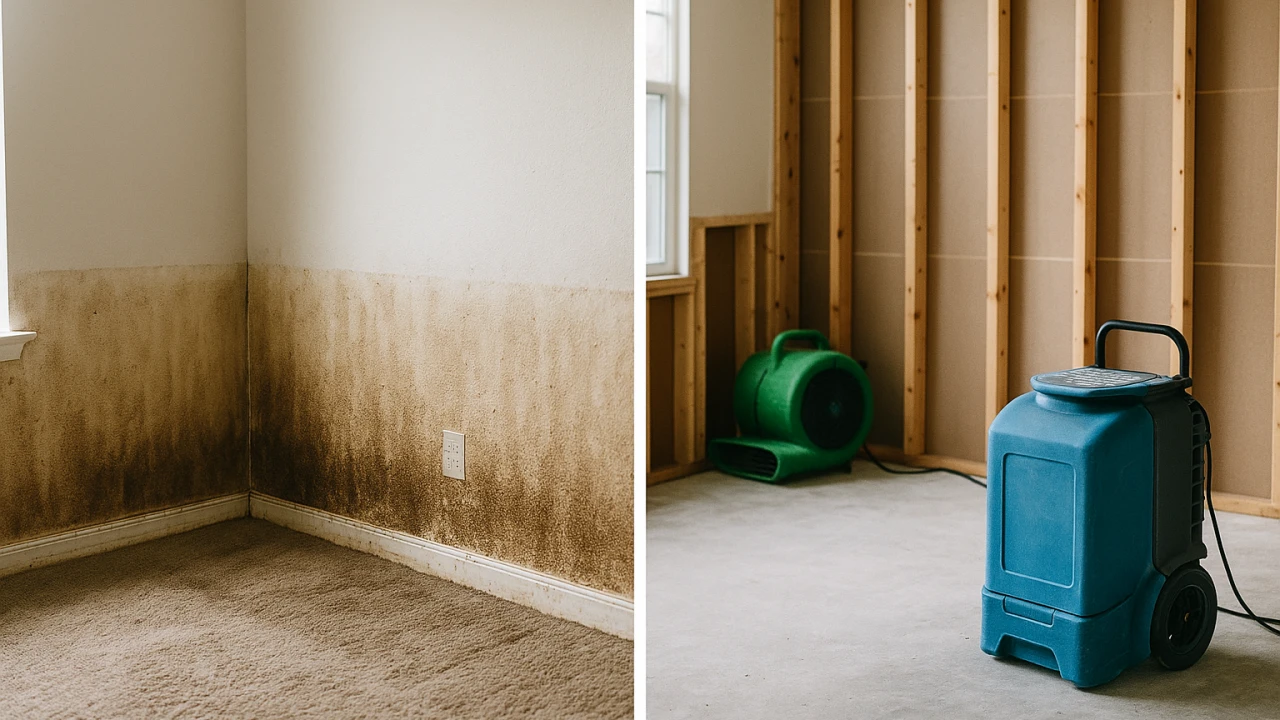
What professional water-damage remediation looks like
- Extraction. Truck-mounted or portable extractors pull standing and absorbed water from carpet, pad, and hard floors fast.
- Demolition where needed. For Category 3 water, drywall is cut above the water line, soaked insulation and flooring are removed and bagged.
- Structural drying. Air movers and commercial dehumidifiers pull moisture out of framing and slab over several days, monitored with meters.
- Antimicrobial treatment. Exposed framing is cleaned and treated to suppress any growth that started before drying finished.
- Verification & rebuild. Materials are confirmed dry to target, then the home is rebuilt — ideally after a clearance check.
What to do in the first 24 hours
- Stay safe first — never enter standing water near outlets or a live panel.
- Stop the source if you safely can (main shutoff for a supply break).
- Get air moving and the AC running to start pulling humidity down.
- Photograph everything for insurance before you remove anything.
- Pull up soaked rugs and move furniture off wet flooring.
- Call for professional extraction — the faster materials dry, the less you lose.
Will insurance pay for flood mold?
Standard homeowners policies in Texas generally exclude rising-water flood damage — that's what separate flood insurance (NFIP or private) covers, and much of Katy is in or near a mapped flood zone. Mold that follows a covered sudden event like a burst pipe may be covered up to a sublimit. Mold after a true flood typically falls under flood coverage, if you carry it. Read our Texas mold insurance guide and our mold-after-flooding resource.
Frequently asked questions
My house already dried out on its own — do I still need anything?
Possibly. "Dry to the touch" and "dry inside the wall" are very different in Katy. Drywall and framing can read wet on a meter for weeks after the surface feels fine, and that hidden moisture is what grows mold. A quick moisture inspection tells you whether you're actually in the clear.
How fast do I need to act after flooding?
Immediately. Mold can begin within 24 to 48 hours on wet materials in our warm climate. The sooner extraction and drying start, the more of your home can be saved and the lower the chance of a mold problem later.
Can the same crew handle both water removal and mold?
Many licensed restoration pros handle extraction, drying, and mold remediation as one continuous project, which avoids gaps where new growth can start. We can connect you with local pros who do both.
Is it worth drying in place or should materials be removed?
It depends on the water category and how long materials stayed wet. Clean water caught quickly can often be dried in place; contaminated flood water means porous materials it touched should be removed. A pro makes that call after assessing the situation.