
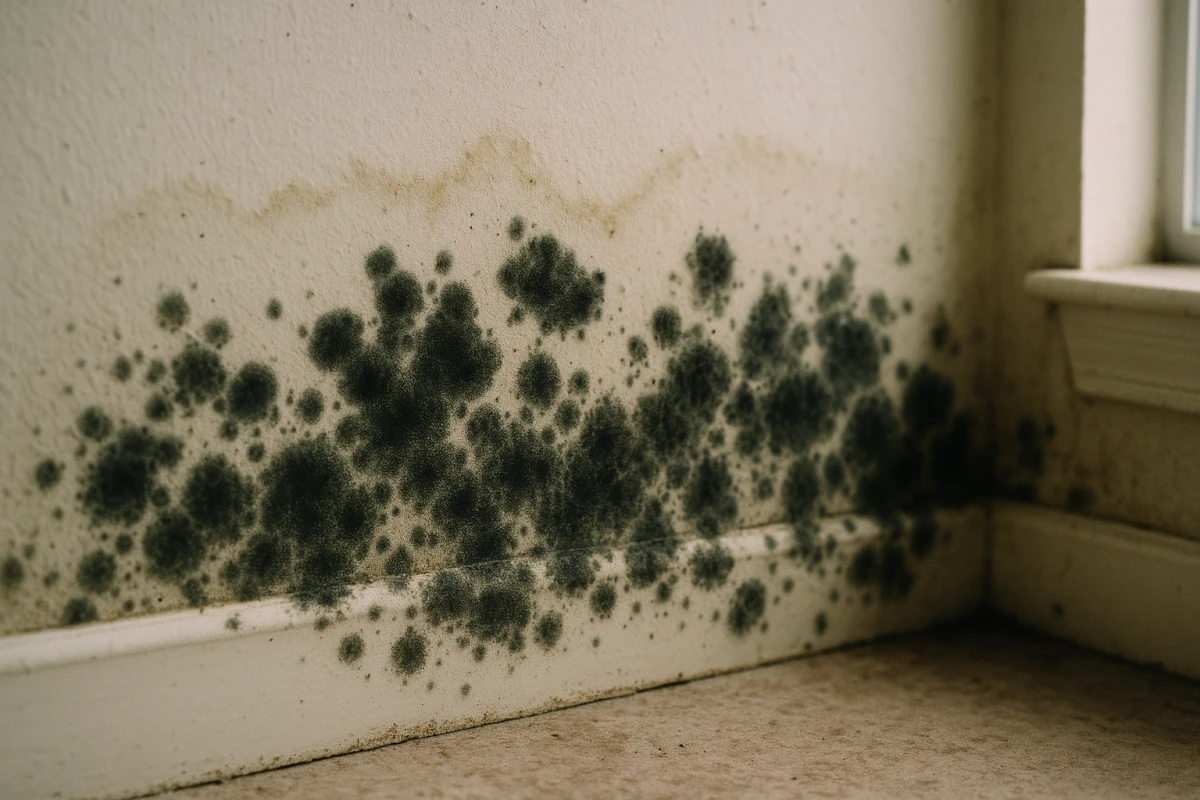
"Black mold" is the phrase that sends Katy homeowners straight to the phone, and for good reason — dark, slimy mold on drywall is almost always a sign that something has stayed wet for a while. The term usually refers to Stachybotrys chartarum, but several dark molds look similar. What they share is a love of the cellulose in drywall paper and the steady moisture our climate provides. The fix is the same regardless of the Latin name: contain it, remove what's contaminated, kill the moisture source, and verify the air is clean.
Why black mold shows up in Katy homes
Stachybotrys needs material that stays wet for days, not hours. In Katy that means slow leaks and trapped humidity far more often than a one-time spill. The usual culprits we see:
- Slab and supply-line leaks that wick up into bottom plates and drywall
- Roof leaks after wind-driven Gulf storms that soak ceilings and wall tops
- Condensation around undersized or leaking AC systems and ductwork
- Post-flood drywall that was painted over instead of removed and dried
- Window leaks and failed flashing on two-story brick elevations
Is black mold actually dangerous?
The science is more measured than the headlines. There's no proven link between household mold and the dramatic illnesses sometimes attributed to it, but the CDC and EPA agree that any indoor mold can trigger real symptoms — congestion, coughing, wheezing, eye and skin irritation — especially for people with asthma, allergies, or weakened immune systems. The sensible position: you don't need to panic, but you shouldn't live with it, and you shouldn't disturb a large colony without containment.
Why you shouldn't just bleach it
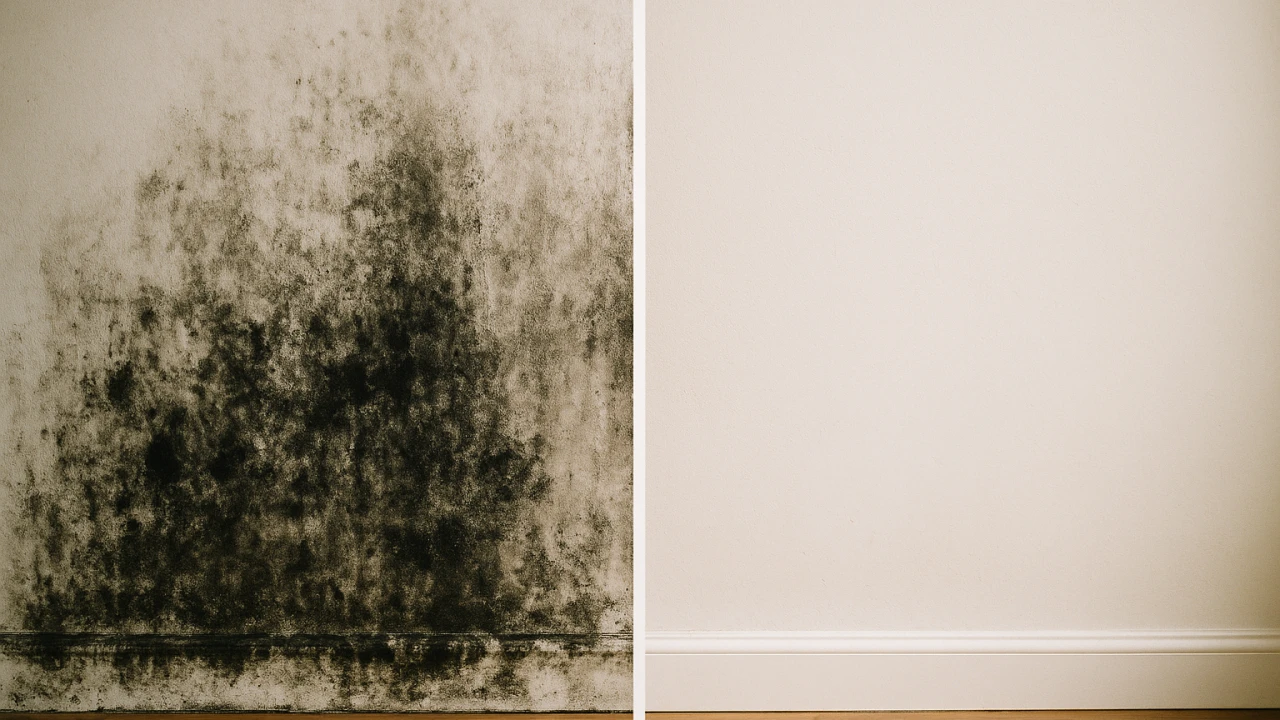
Bleaching a black-mold patch is the most common Katy DIY mistake. Bleach can lighten the stain on a non-porous surface, but on porous drywall the mold roots (hyphae) sit below the surface where bleach — mostly water — can't reach. You wipe away the color, the moisture stays, and the colony regrows in weeks. Worse, scrubbing a dry colony launches millions of spores into the air. Real remediation removes the contaminated material rather than cosmetically treating it.
The containment-first removal process
- Seal the room. Plastic sheeting and a negative-air HEPA scrubber keep spores from spreading to clean parts of the house.
- Remove contaminated porous materials. Affected drywall, insulation, and baseboard are cut out past the visible edge and double-bagged.
- Clean what stays. Framing and other salvageable surfaces are HEPA-vacuumed and wiped with an appropriate antimicrobial.
- Dry and fix the source. The cavity is dried to a verified target and the leak — roof, plumbing, or AC — is repaired so it can't return.
- Verify. A post-remediation clearance test confirms spore counts are back to normal before the wall is closed.
How much does black mold removal cost in Katy?
A small contained area often runs in the high hundreds to low thousands; larger jobs with structural drying and rebuild climb from there. Black/toxic-appearing mold typically adds a modest surcharge for the extra containment and PPE. Use our cost estimator for a ballpark, then get a free on-site quote.
Frequently asked questions
Can I stay in my house during black mold removal?
Often yes, if the work is contained to one area and the rest of the home is sealed off and kept under negative pressure. For larger jobs — especially whole-home or post-flood remediation — a pro may recommend staying elsewhere for a day or two, particularly if anyone in the household has asthma or a compromised immune system.
How do I know if it's really Stachybotrys?
Only a lab can confirm the species from a sample. From a treatment standpoint it rarely matters: any dark, water-damage mold on porous material is handled the same containment-first way. If you want certainty — for a real-estate deal, say — an inspector can take a tape-lift or swab sample.
Will it come back after removal?
Not if the moisture source is fixed. Mold can't grow without water. Reputable remediation always pairs removal with finding and repairing the leak, condensation, or humidity problem that fed it — which is why DIY bleach jobs so often fail.
Does homeowners insurance cover black mold?
It depends entirely on the cause. Mold from a sudden, covered event (a burst pipe) is often covered up to a policy sublimit; mold from long-term seepage or deferred maintenance usually isn't. See our guide on Texas mold insurance coverage.