
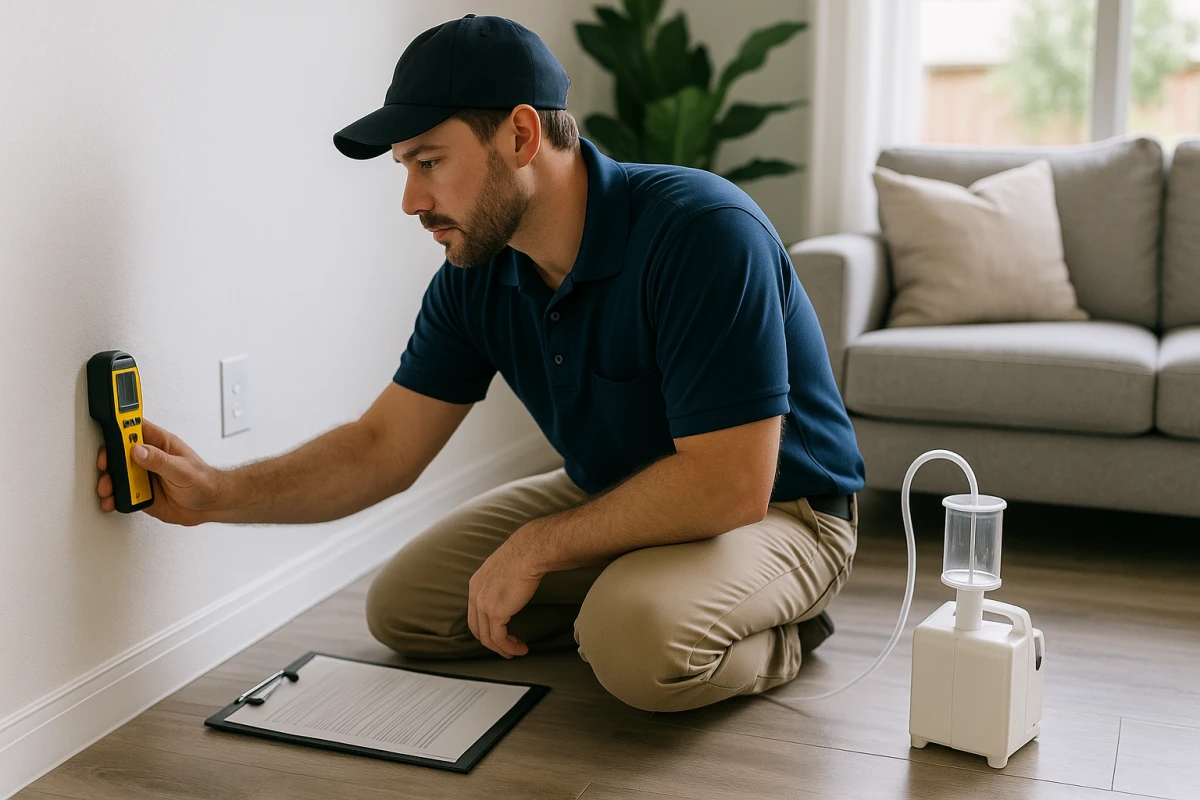
You can't fix what you can't find. In Katy, the hardest part of a mold problem is almost never the cleanup — it's locating every place moisture has traveled inside a slab-on-grade home with the AC running. A proper inspection answers three questions before anyone tears out a wall: Is it mold? How far has it spread? And where is the water coming from? The licensed inspectors we connect you with are independent of any remediation crew, so the findings drive the scope — not the other way around.
What a Katy mold inspection actually involves
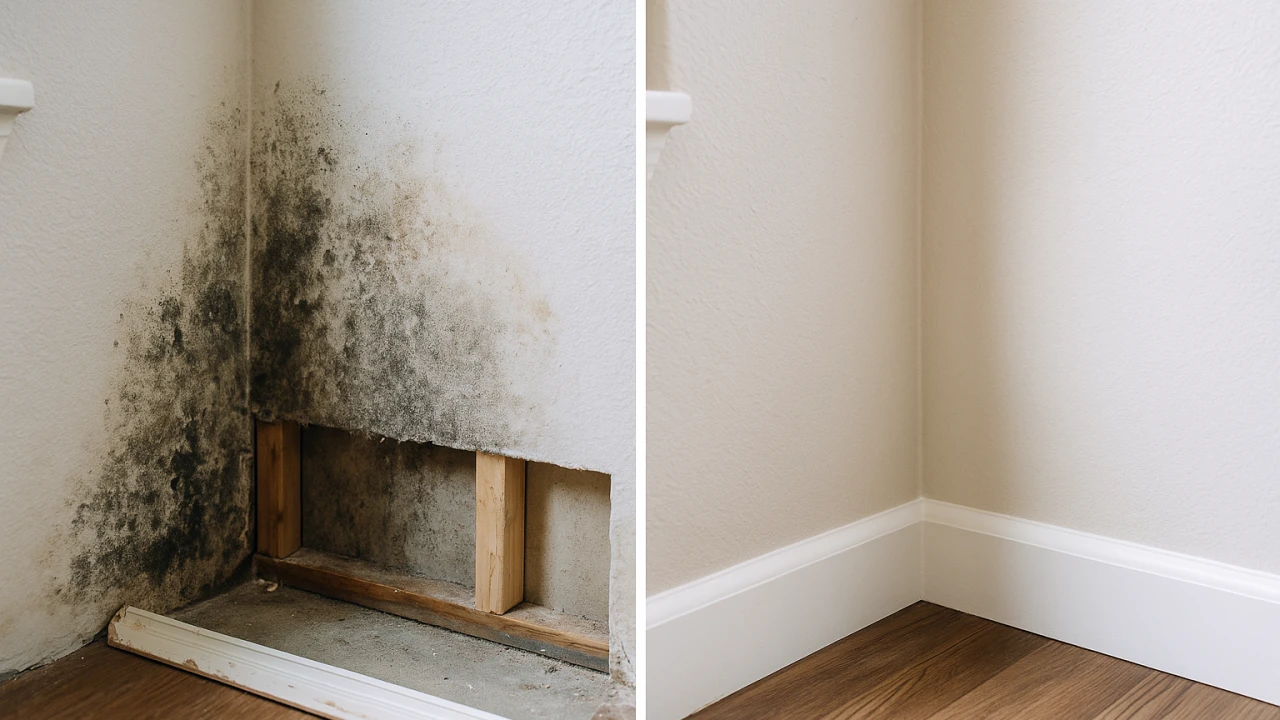
A thorough visual inspection is the foundation, but in our climate the instruments do the real work. Because Katy homes are sealed tight and air-conditioned for most of the year, surface mold is often just the tip of a much wetter problem hiding in a wall cavity, under flooring, or above a ceiling.
- Moisture metering — pin and pinless meters read the actual water content of drywall, baseboard, subfloor, and framing, mapping how far a leak has wicked.
- Thermal imaging — an infrared camera reveals cool, damp patches behind walls and around AC closets that look perfectly dry to the eye.
- Hygrometer readings — indoor relative humidity and dew point tell an inspector whether your house itself is feeding mold, a common finding in oversized-AC homes.
- Air and surface sampling — spore-trap air samples (compared against an outdoor baseline) and tape-lift or swab surface samples sent to an accredited lab.
Air sampling vs. surface sampling — which do you need?
Surface samples confirm what a specific stain is. Air samples tell you whether elevated spore counts are circulating through your living space — the part that actually affects the people breathing in the house. A good inspector recommends one, the other, or both based on what they see, and always pulls an outdoor control sample so the lab can tell a normal Katy spring spore count from a genuine indoor problem.
When a Katy homeowner should get an inspection
- A persistent musty or earthy smell, especially when the AC kicks on
- Any home that took water during a storm, slab leak, or supply-line break
- Buying or selling — a clean third-party report protects both sides of a deal
- Recurring allergy, asthma, or sinus symptoms that ease when you leave the house
- Visible staining on drywall, ceilings, or around windows and AC vents
- After a roof leak or a water heater, dishwasher, or ice-maker line failure
Reading your lab report without the jargon
A lab report lists spore types and counts per cubic meter for each sample. The numbers matter less than the comparison: indoor counts should be similar to or lower than the outdoor baseline, and the types should match. When an indoor sample shows water-damage molds like Stachybotrys, Chaetomium, or heavy Aspergillus/Penicillium that aren't in the outdoor air, that's the signal of an active indoor moisture problem — not just spores that blew in through the door.
Why an independent inspector matters
When the same company tests and remediates, there's a built-in incentive to find more work. The inspectors we refer you to do assessment and testing, then hand you a report you own — you're free to get competing remediation bids against the same scope. That separation is the single best protection a Katy homeowner has against an oversized estimate.
What it costs
A visual inspection with moisture mapping is often modest or free as part of a quote; lab-backed air and surface testing typically runs a few hundred dollars depending on the number of samples. Compared with tearing into the wrong wall, it's cheap insurance. See our Katy cost guide for current ranges.
Frequently asked questions
Do I really need a mold test, or can I just clean it?
For a small, clearly visible spot on a hard surface — under 10 square feet, with an obvious dried-up source — many homeowners clean it themselves. Testing earns its keep when there's a musty smell with no visible mold, after any flooding, when someone in the home has unexplained symptoms, or during a real-estate deal. In Katy, the bigger problem is usually the moisture you can't see.
How long does an inspection take?
A typical single-family Katy home takes one to two hours for a visual inspection with moisture mapping. If air and surface samples are collected, lab turnaround usually adds two to five business days for the written report.
Will the inspector also do the remediation?
The independent inspectors we connect you with focus on assessment and testing and give you a report you own. You can then get remediation bids against that scope — including a post-work clearance test from the same inspector to confirm the job worked.
Is a little mold on Katy bathroom grout an emergency?
Usually not. Surface mildew on grout and caulk is common in our humidity and wipes away. It becomes a real concern when it keeps coming back fast, spreads onto painted drywall, or you smell musty air — signs that moisture is getting behind the tile.