
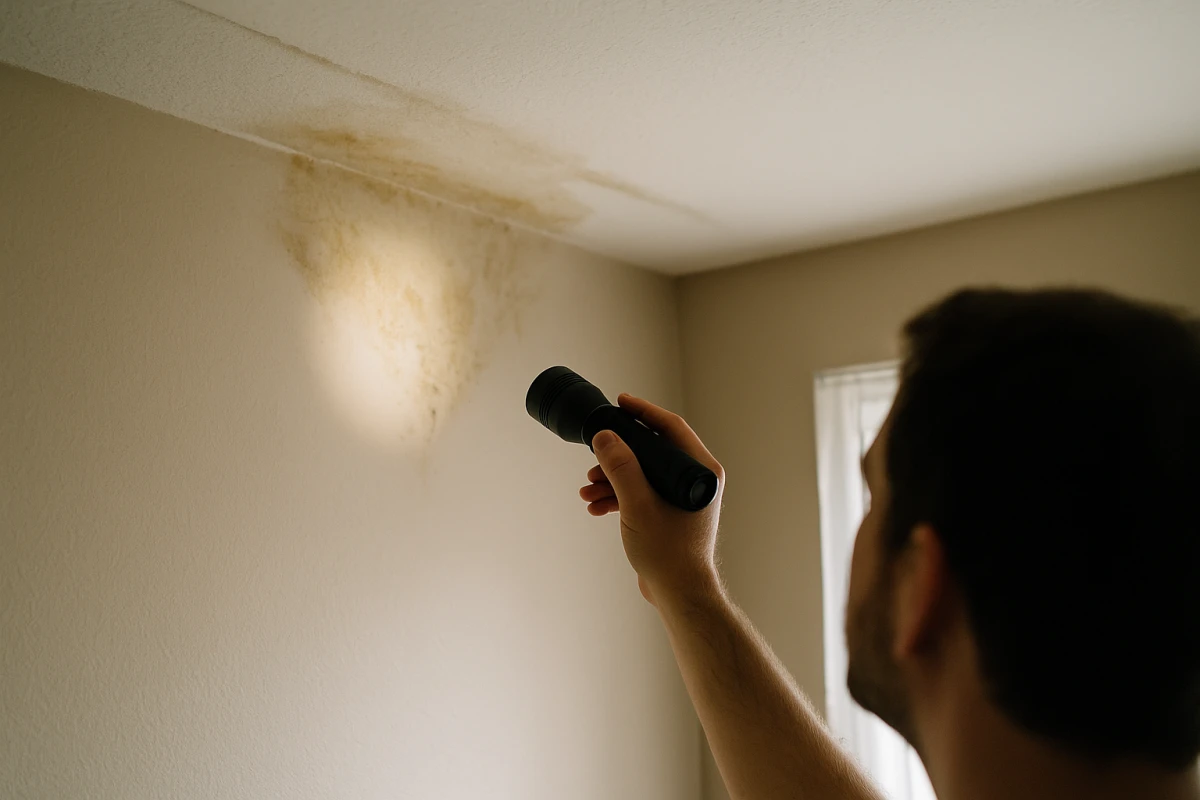
Mold is sneaky in Katy because so much of it hides — behind walls, above ceilings, inside ductwork — while only hinting at its presence. By the time you see an obvious black patch, the problem has usually been growing for a while. Learning the early signs lets you catch it when it's small, contained, and cheap to fix. Here are the twelve things that should put a Katy homeowner on alert.
Signs you can smell and see
- A musty, earthy smell. The most reliable early warning — especially if it's stronger when the AC runs, which points to mold in the system or ducts.
- Visible discoloration. Black, green, gray, or white patches on walls, ceilings, grout, or trim. Even small spots warrant a closer look.
- Water stains. Yellowish or brown rings and streaks signal moisture — and where there's been moisture, mold often follows.
- Peeling or bubbling paint. Paint that's lifting, blistering, or wallpaper that's pulling away often hides moisture (and mold) behind it.
- Warped or buckled surfaces. Bowing walls, swollen baseboards, or buckled flooring point to water in the materials.
- Dark grout and caulk that won't stay clean. Mildew that keeps returning fast, especially spreading onto drywall, suggests a deeper moisture issue.
Signs you feel
- Allergy symptoms that ease when you leave. Congestion, sneezing, itchy eyes, or a scratchy throat that improves away from home is a classic indoor-mold clue.
- Worsening asthma or breathing issues. Mold can trigger asthma and respiratory symptoms, particularly indoors with the AC circulating air.
- Headaches or fatigue at home. Non-specific, but worth noting if they pattern with time spent in a particular room.
- Skin or eye irritation. Unexplained irritation that tracks with being home can point to elevated indoor spores.
Signs in the systems
- Humidity that won't come down. A hygrometer reading consistently above 60% indoors means conditions are ripe for mold even if you don't see it yet.
- A history of leaks or flooding. Any past roof leak, slab leak, plumbing failure, or flood is a reason to suspect hidden mold, especially if repairs were rushed.
Where to look in a Katy home
- Under sinks and around toilets, dishwashers, and water heaters
- Around AC air handlers, registers, and in the attic above them
- Bathroom ceilings and shower surrounds
- Window sills and the walls beneath them
- Behind furniture on exterior walls and in closets on outside corners
- The bottom edges of drywall on slab homes, especially after any leak
What to do if you spot the signs
Don't panic, and don't start scrubbing a large area — disturbing mold releases spores. For a tiny surface spot with an obvious, fixed source, careful DIY cleanup can be fine. For anything larger, a musty smell with no visible source, symptoms in the household, or any history of water, get a professional inspection. Finding the moisture source is the whole game; the cleanup is the easy part once you know where the water is.
Frequently asked questions
I smell mold but can't see any — what does that mean?
It usually means mold is growing somewhere out of sight: inside a wall, above a ceiling, under flooring, or in your HVAC system. A musty smell is produced by active growth, so the odor is real even when the source is hidden. An inspection with moisture mapping is the way to locate it.
Are my symptoms really from mold?
They might be. Mold commonly triggers allergy and respiratory symptoms — congestion, coughing, itchy eyes, asthma flare-ups — that often ease when you leave the house. It's not a diagnosis, but a pattern tied to being home is worth investigating alongside a doctor's input.
Is a small amount of mold a big deal?
A small surface spot with a known, fixed source often isn't, and can be cleaned carefully. It becomes a bigger deal when it keeps returning, spreads onto porous materials, comes with a musty smell, or follows a leak — signs that moisture is feeding it from somewhere you can't see.
Should I test the air myself with a store kit?
DIY settle-plate kits are generally unreliable — they'll grow something from almost any indoor air and don't tell you much. Professional air sampling compares indoor counts against an outdoor baseline with lab analysis, which is far more meaningful if you want real answers.