
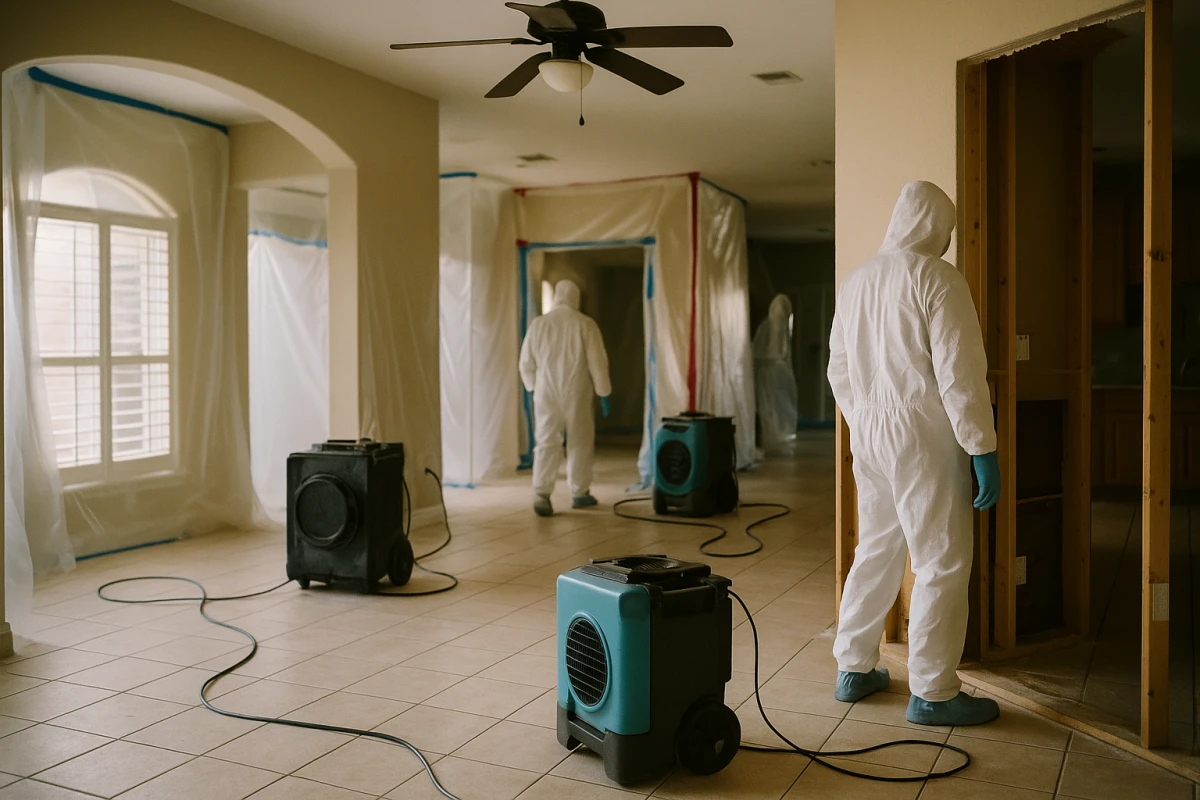
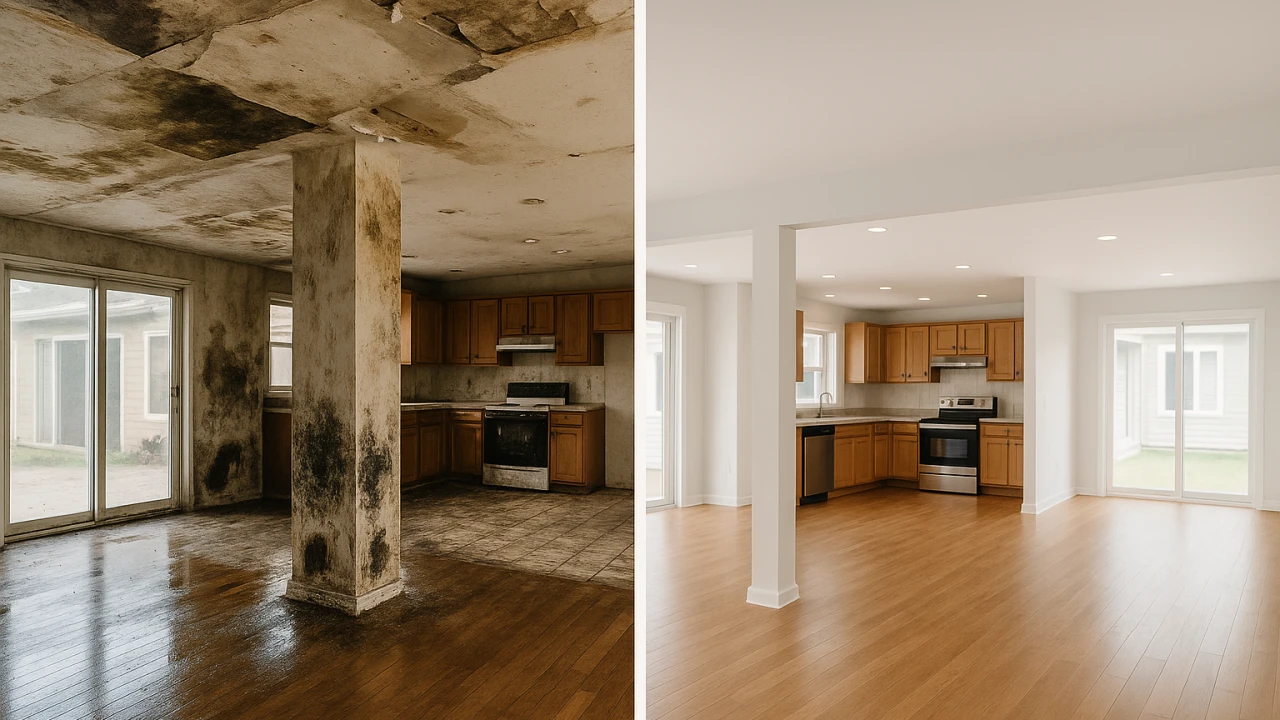
Sometimes mold isn't a corner of one room — it's everywhere. After a major flood, a long-undetected leak, or months of runaway humidity in a vacant or newly purchased home, mold can spread across floors, ceilings, ductwork, and multiple rooms at once. Whole-home remediation is a coordinated project: containment zones, structural drying, large-scale removal, and a clear sequence so spores from one area don't recontaminate another. It's the most involved work we refer, and the most important to get right the first time.
When a Katy home needs whole-home remediation
- After significant flooding — reservoir releases, storm surge into the first floor, or a multi-room plumbing failure
- A leak that went undetected for months behind walls or under flooring
- Buying a home that sat vacant with the AC off through a Katy summer
- Widespread HVAC contamination distributing spores to every room
- An air test showing elevated spore counts throughout the living space
How a large project is sequenced
The difference between a good whole-home job and a disaster is sequencing. Done right, the home is divided into zones and worked in an order that keeps clean areas clean:
- Full assessment. Every room is mapped for moisture and growth, and an air-quality baseline is established.
- Zoned containment. The home is split into contained sections, each under negative air, so work in one zone can't spread to another.
- Systematic removal. Contaminated porous materials come out zone by zone; HVAC is isolated and addressed so ducts don't redistribute spores.
- Structural drying. Commercial dehumidifiers and air movers bring framing and slab down to target, monitored daily.
- Cleaning & treatment. Salvageable surfaces are HEPA-cleaned and treated throughout.
- Clearance & rebuild. Independent post-remediation testing confirms the whole home before reconstruction begins.
Why HVAC is central to a whole-home job
In a multi-room mold problem, the air-conditioning system is both a victim and a distributor. If the ducts and air handler aren't isolated early and remediated, they'll quietly recontaminate every room you just cleaned. That's why whole-home remediation in Katy almost always includes a hard look at the HVAC system — cleaning or replacing affected components and controlling the humidity that let the problem grow house-wide in the first place.
Living arrangements during the work
For a contained single-room job you can usually stay home. For whole-home remediation — especially with widespread removal, structural drying, and HVAC down — many families relocate for several days to a couple of weeks. If anyone in the household has asthma, allergies, or a compromised immune system, temporary relocation is often recommended even for smaller large-scale jobs. Your remediation contractor and, where applicable, your insurer can help plan this.
What whole-home remediation costs
These are the largest projects, and cost scales with square footage, how much structure must be removed and rebuilt, HVAC scope, and drying time. Our estimator can rough out the remediation portion; a detailed on-site assessment is essential for a real number. Read our cost guide for how pros build these estimates.
Frequently asked questions
How long does whole-home mold remediation take?
It varies widely with the size and severity, but multi-room projects commonly run from several days to two or three weeks, including structural drying time and the rebuild. Drying can't be rushed — framing has to reach a verified moisture target before walls close up.
Do we have to move out?
For large, multi-zone projects with the HVAC down, many families relocate temporarily — especially if anyone has respiratory issues. Smaller contained work often lets you stay. Your contractor will advise based on the scope and your household.
How do I know the whole house is actually clean?
Independent post-remediation clearance testing — air samples throughout the home compared against an outdoor baseline — is the gold standard. Insist on it before the rebuild closes everything back up.
Will insurance cover a whole-home project?
It depends on the cause. A sudden covered event (burst pipe) may be covered up to limits; long-term seepage usually isn't, and true flooding falls under separate flood insurance. Thorough documentation is essential — see our insurance guide.