
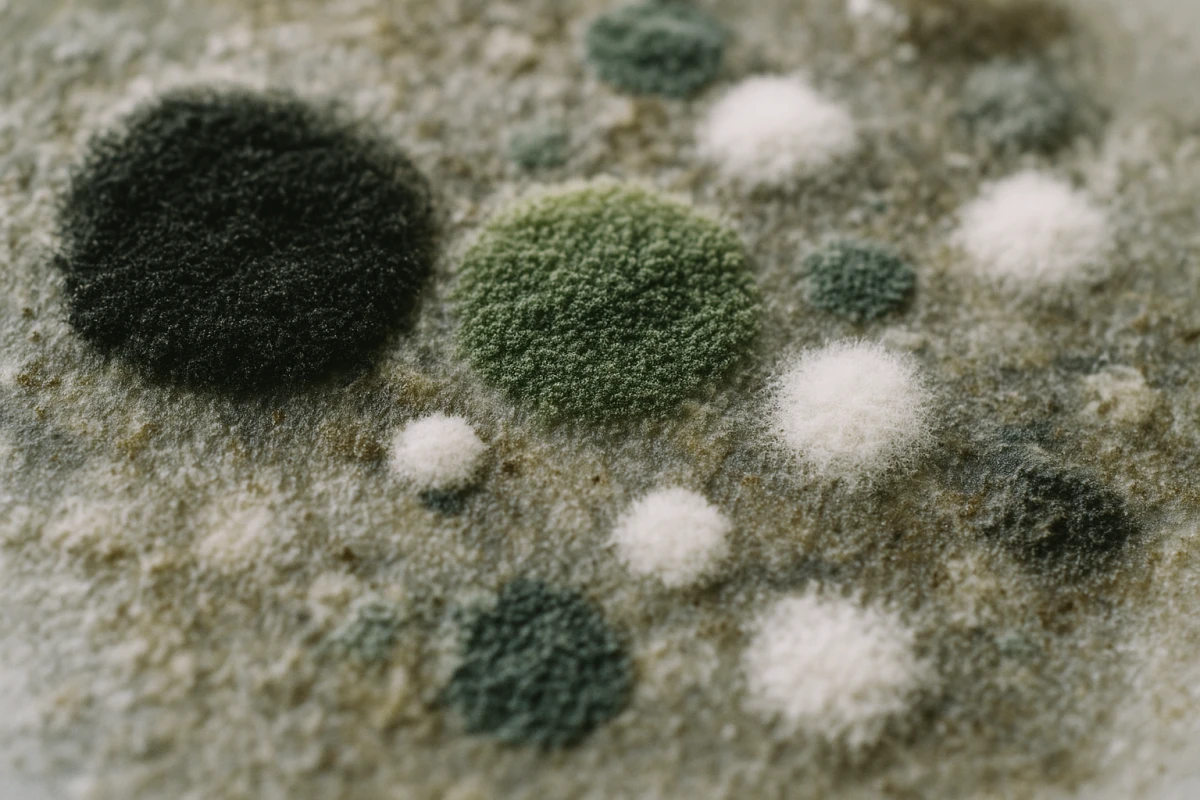
Homeowners often want to know exactly which mold they're dealing with, as if the species changes the plan. For the most part it doesn't — any mold growing indoors signals a moisture problem, and the removal approach is similar regardless of the name. Still, knowing the common household molds helps you understand what you're seeing and why "black mold" gets all the attention. Here's a plain-English tour of the molds that show up in Katy homes.
The big picture: it's all about water
There are thousands of mold species, and dozens turn up indoors. What they share is a need for moisture and an organic food source — the cellulose in drywall, wood, and dust. The color and texture you see depends on the species and the surface, but the cause is always the same: water that stuck around. That's why identification matters less than finding the moisture.
Common household molds
Stachybotrys chartarum ("black mold")
The famous one. Dark green to black and often slimy, Stachybotrys needs material that's been wet for days — chronically damp drywall, flood-soaked materials, long-running leaks. It's the species behind most "toxic black mold" headlines. The reality is more measured than the hype, but it does indicate serious, sustained moisture and should be removed under containment. More on our black mold page.
Aspergillus
Extremely common indoors, Aspergillus appears in many colors and textures and grows on walls, insulation, and dust. Some species are a particular concern for people with weakened immune systems. It's one of the molds most often found in Katy indoor air samples.
Penicillium
Blue-green and fuzzy, Penicillium spreads quickly on water-damaged materials, carpet, wallpaper, and insulation — common after leaks and floods. It's a frequent allergy trigger and can spread fast through a home.
Cladosporium
Olive-green to brown and suede-like, Cladosporium grows on both warm and cool surfaces — fabrics, carpets, painted walls, and around windows where condensation collects. It's one of the most common molds overall and a routine allergy culprit.
Alternaria
Dark and fuzzy, Alternaria likes damp spots — showers, under leaky sinks, around windows. It's a well-known allergen and often the mold people find in bathrooms.
Chaetomium
Found in chronically water-damaged buildings, often alongside Stachybotrys, Chaetomium has a distinctive musty odor and signals long-term moisture — the kind of finding that points to a leak that's been active for a while.
What the color tells you (and doesn't)
Color is a weak guide to species — the same mold can look different on different surfaces, and very different molds can look alike. "Black mold" isn't automatically Stachybotrys; plenty of dark molds aren't. Don't try to diagnose risk by color. What reliably matters is that mold is growing at all, which means moisture is present and needs to be found and fixed.
The bottom line for Katy homeowners
Whatever the species, the response is the same: don't disturb a large colony without protection, find and fix the moisture source, remove contaminated porous materials under containment, and verify the air is clean afterward. If you want to know exactly what you have — or you just want it gone — start with a professional inspection and test.
Frequently asked questions
Is all black-colored mold the dangerous 'toxic' kind?
No. Many molds appear dark or black without being Stachybotrys, and color is an unreliable way to identify species or risk. What matters is that mold is growing — meaning there's moisture to find and fix. If you want to know the exact species, a lab test from a sample can tell you.
Does the type of mold change how it's removed?
Generally no. The containment-first approach — isolate, remove contaminated porous materials, fix the moisture, verify — is similar across species. Identification matters more for documentation or when someone is immunocompromised than for the cleanup method itself.
Which molds are most common in Katy homes?
Cladosporium, Penicillium, Aspergillus, and Alternaria show up routinely in our humid climate, with Stachybotrys and Chaetomium appearing where materials have stayed wet a long time. Air sampling against an outdoor baseline shows what's actually elevated in a given home.
Should I get the mold tested to know what it is?
It's optional for treatment but useful for documentation — real-estate transactions, insurance claims — or peace of mind, and important if a household member is immunocompromised. An inspector can take air or surface samples for lab identification.