
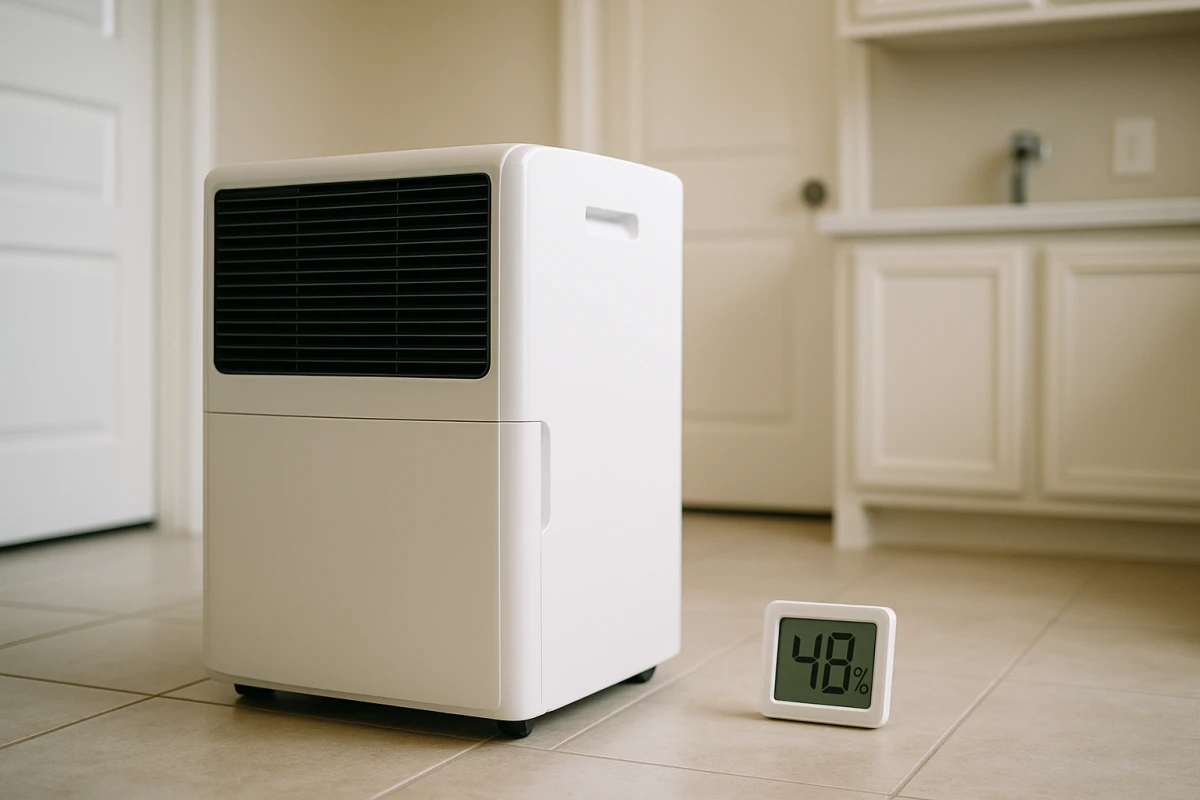
In a climate like Katy's, preventing mold is cheaper, easier, and far less disruptive than removing it. And it's very doable — mold can't grow without moisture, so controlling humidity and water is the entire strategy. Here's a practical, Katy-specific plan to keep your home in the clear, organized from the highest-impact habits to the fine-tuning.
Rule #1: Keep indoor humidity below 60%
This is the foundation. Mold needs relative humidity above roughly 60% to thrive, and the sweet spot for a comfortable, mold-resistant home is 45–55%. The problem in Katy is that our outdoor humidity is so high that homes drift above 60% indoors during muggy stretches unless you actively manage it.
- Get a hygrometer. A $15 digital monitor tells you your actual indoor humidity. You can't manage what you don't measure.
- Run your AC to dehumidify. Properly sized AC removes moisture as it cools. If yours cools fast but leaves the house clammy, it may be oversized.
- Add a dehumidifier. In Katy, many homes need a whole-home or portable dehumidifier to hold the line in shoulder seasons when the AC runs less.
Rule #2: Fix water fast
Every leak is a potential mold colony. The faster you find and fix water, the less chance mold has to start.
- Repair plumbing leaks, drips, and running toilets promptly — don't let a slow drip soak a cabinet for months.
- Address roof leaks and damaged flashing before the next Gulf storm finds them.
- Keep your AC condensate drain line clear; a clog backs water into the pan and the closet.
- After any spill or overflow, dry the area thoroughly within 24–48 hours.
Rule #3: Ventilate the moisture you make
Cooking, showering, and laundry add a surprising amount of water to indoor air. Get it out before it condenses:
- Run bathroom exhaust fans during and for 20 minutes after showers — and make sure they vent outside, not into the attic.
- Use the kitchen range hood when cooking and boiling.
- Vent your clothes dryer to the exterior and keep the duct clear.
- Crack a window or run a fan when humidity-generating activities pile up.
Rule #4: Manage water around the house
- Keep gutters clean and downspouts directing water well away from the foundation.
- Slope soil and grade away from the slab so rain doesn't pool against it.
- Pull mulch and dense plantings back from the foundation and exterior walls.
- Don't over-irrigate beds against the house, especially with new landscaping.
Rule #5: Maintain your systems
- Service your AC at least once a year; keep filters fresh and the coil clean.
- Consider a fresh-air or dehumidification upgrade if your home stays humid.
- Inspect the attic seasonally for condensation, leaks, and blocked soffit vents.
- Check under sinks and around water heaters periodically for early drips.
Rule #6: Watch the high-risk spots
Prevention also means knowing where to look. Periodically check the places Katy mold loves — under sinks, around the AC closet, bathroom ceilings, window sills, and the bottom of exterior walls. Catching a small spot early keeps it from becoming a remediation. If you ever smell musty air with nothing visible, that's your cue for an inspection.
Frequently asked questions
Do I really need a dehumidifier in Katy?
Many Katy homes benefit from one. AC removes humidity while it runs, but in mild and shoulder weather it cycles less and the house can drift above 60% relative humidity. A whole-home or portable dehumidifier holds the safe range year-round and takes load off your AC. A hygrometer will tell you if you need one.
What humidity level should I keep my house at?
Aim for 45–55% relative humidity. Below 60% strongly discourages mold; 45–55% is comfortable and safe. Above 60% for extended periods is when mold risk climbs — common in Katy without active humidity control.
Is bleach a good way to prevent mold?
Not really. Bleach doesn't address the moisture that causes mold, and on porous surfaces it can't reach the roots. Prevention is about humidity control, fixing leaks, and ventilation — not periodic bleaching. Keep the conditions wrong for mold and you won't need to fight it.
What's the single most effective thing I can do?
Keep indoor humidity below 60% and fix water fast. Those two habits prevent the large majority of mold problems in our climate. A hygrometer, well-maintained AC, vented bath fans, and prompt leak repairs cover most of the battle.