
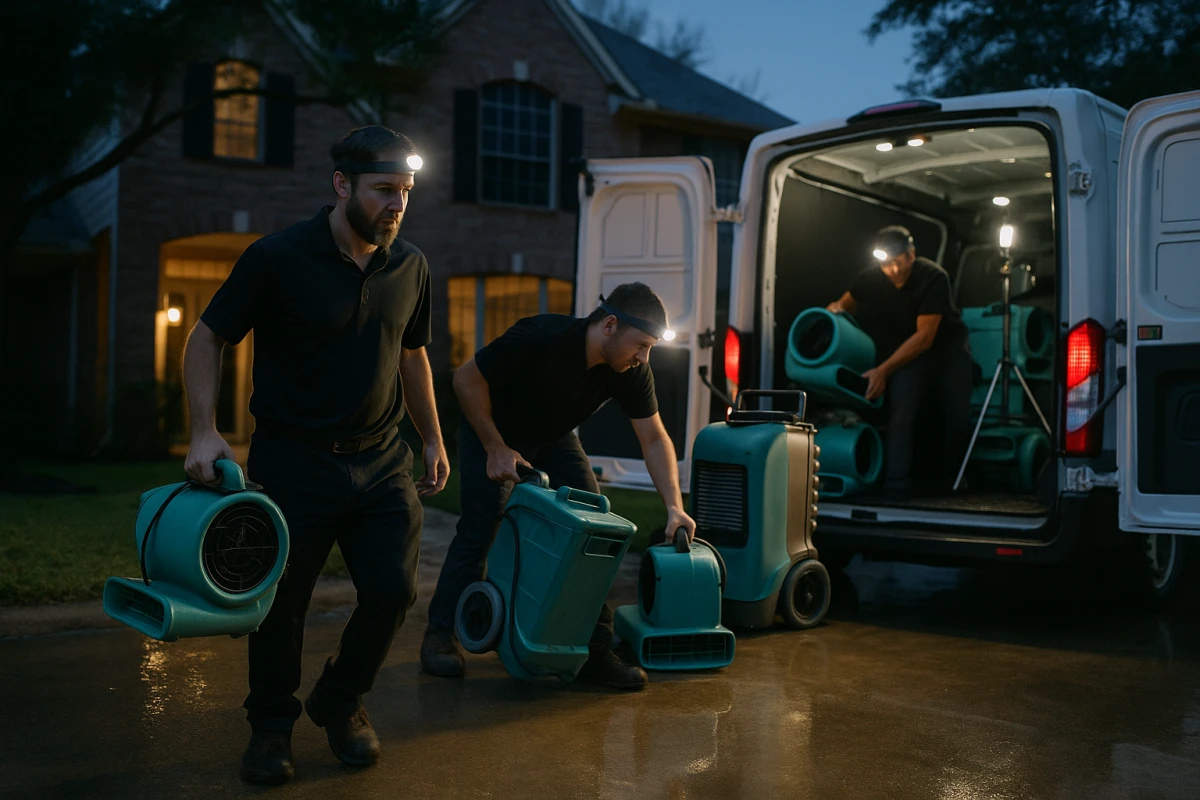
Mold itself is rarely a midnight emergency — but the water that causes it almost always is. A burst supply line, a failed water heater, a roof torn open by a Gulf storm, or a backed-up drain can soak a Katy home in minutes, and in our heat the mold clock starts within a day or two. Emergency response is really about speed: stop the water, extract it, and start structural drying before mold ever gets a foothold. When you call, we move quickly to connect you with a licensed local pro who can respond fast.
When to treat it as an emergency
- A burst or leaking pipe, supply line, or water heater flooding a room
- Storm flooding or a roof breach letting water into the home
- A sewage or drain backup (a health hazard as well as a water problem)
- Water spreading toward outlets, the electrical panel, or another floor
- A large, actively spreading mold bloom appearing after recent water
- Anyone in the home with severe respiratory symptoms tied to the event
What to do while help is on the way
- Safety first. Avoid standing water near electricity; shut off power to affected areas at the panel only if you can do so safely.
- Stop the source. Close the main water shutoff for a plumbing failure.
- Document it. Photograph and video everything before you move or remove anything — your insurer will want it.
- Reduce the spread. Move valuables and electronics up and out of the water; lift draperies and rugs.
- Get airflow going. Run the AC and fans to start lowering humidity if it's safe to do so.
- Don't wait to call. The faster extraction and drying begin, the less you lose — and the lower the mold risk.
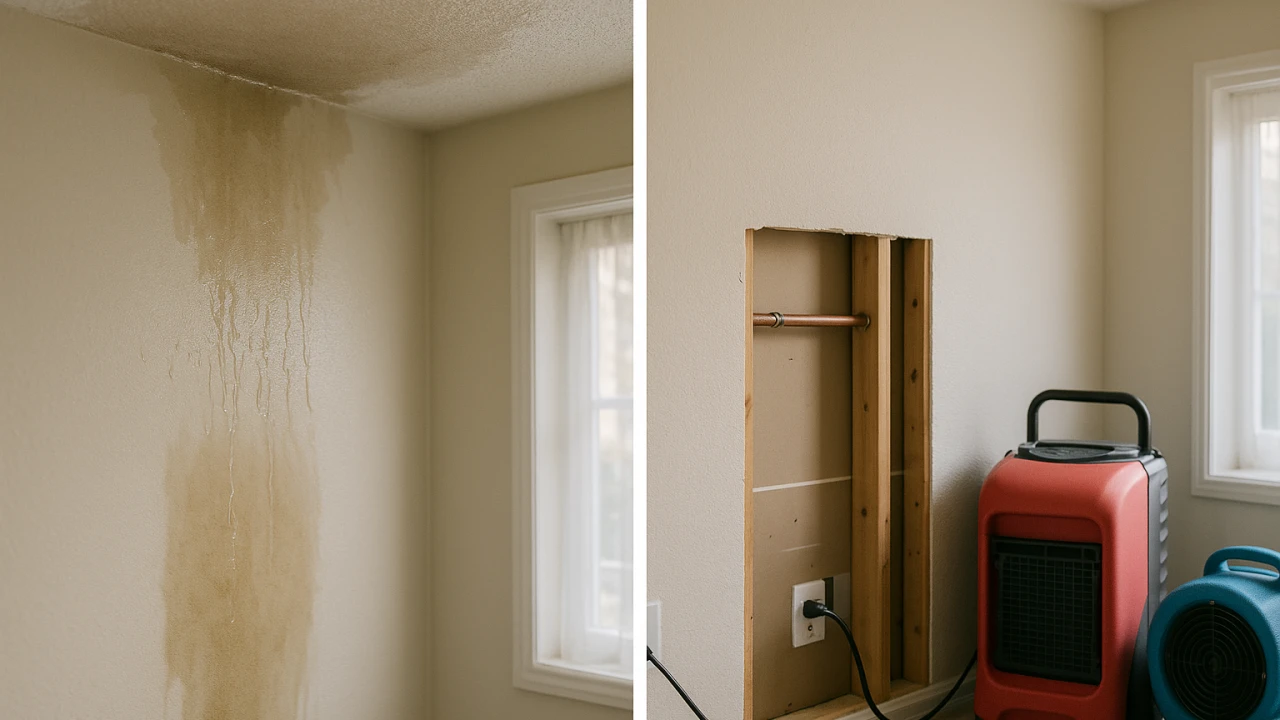
Why fast response beats mold
This is the whole game in Katy. Mold needs material that stays wet, and the single biggest factor in whether a water event becomes a mold problem is how quickly the structure dries. Professional extraction and commercial dehumidification can pull a home back from the brink in the critical first 24 to 48 hours — the window when DIY box fans simply can't move enough moisture. Acting fast often means the difference between drying your drywall in place and tearing it out weeks later.
From emergency to remediation
A good emergency response flows straight into remediation without a gap. The same crew that extracts and dries can assess whether any mold has started, remove what's affected, treat the structure, and verify the home is clean — one continuous project. That continuity matters: a stop-and-start response leaves windows where new growth can take hold. If mold has already begun, the work transitions to our standard water-damage and black-mold processes.
Cost and insurance in an emergency
Emergency water mitigation is often covered by homeowners insurance when it follows a sudden, accidental event — and acting fast to prevent further damage is something insurers expect. Document everything, keep receipts, and read our Texas mold insurance guide. For the remediation portion, our estimator gives a ballpark.
Frequently asked questions
Is mold ever a true emergency?
Mold growth itself is rarely an overnight emergency, but the water causing it is — and stopping and drying that water fast is what prevents mold. Treat active flooding, burst pipes, and sewage backups as emergencies; the sooner drying starts, the lower the mold risk.
How fast can someone respond in Katy?
For genuine water emergencies, licensed local restoration pros aim for same-day response. Call right away — the first 24 to 48 hours are the critical window for preventing mold in our climate.
Should I start tearing out wet drywall myself?
Document everything first, and avoid disturbing large areas without protection — especially if mold has already started, since that releases spores. Getting water out and air moving safely is helpful; let a pro handle removal and structural drying.
Will insurance cover emergency water mitigation?
Often yes, when it follows a sudden, covered event. Insurers generally expect you to act quickly to limit further damage. Keep photos and receipts, and check your policy's mold sublimit — see our insurance guide for details.